Cream cheese substitutes, sorted by whether it gets heated
Blended cottage cheese replaces cream cheese 1:1 and cuts about 10 g fat a serving. Which substitutes survive baking, and which split the moment they get hot.
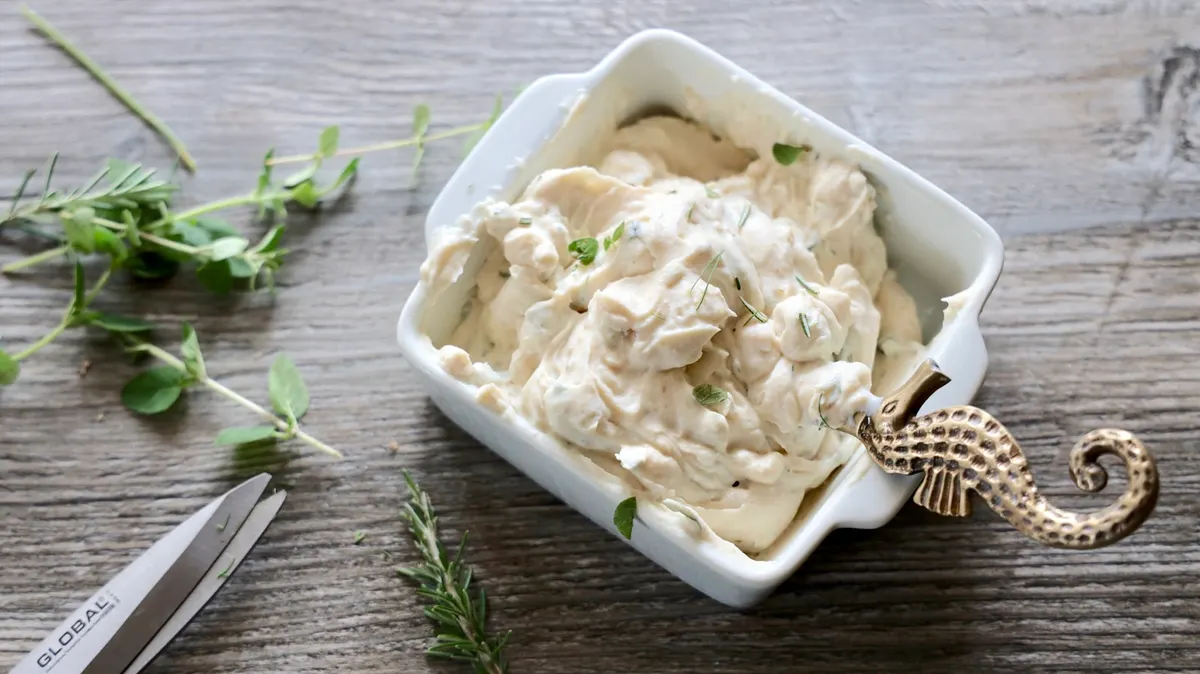
The swap ReciPop makes
Pick a goal of more protein or less fat and the app rewrites this line for you.
Estimates, not measurements. Typical effect of this swap per serving, which will vary with brand and quantity.
What this swap does to your recipe
Swapping cream cheese for blended cottage cheese. Set how many servings your recipe makes and see the change across the whole dish.
| Change | Per serving | Whole dish |
|---|---|---|
| Calories | -90 | -360 |
| Protein | +5 g | +20 g |
| Fat | -10 g | -40 g |
Estimates, not measurements. The per-serving figure is this swap's typical effect and moves with the brand and quantity you use.
How they compare, per 100 g
Most substitute guides tell you what works and stop there. If you are choosing partly on macros, here are the numbers side by side.
Cream cheese is mostly fat, and most of the swaps are not. Mascarpone is the exception worth knowing: reach for it and you add fat rather than save any.
| Per 100 g | kcal | Protein | Carbs | Fat |
|---|---|---|---|---|
| Cream cheese | 350 | 6 g | 4 g | 34 g |
| Blended cottage cheese | 98 | 11 g | 3.4 g | 4.3 g |
| Greek yogurt, strained | 97 | 9 g | 4 g | 5 g |
| Ricotta | 174 | 11 g | 3 g | 13 g |
| Neufchatel | 253 | 9 g | 4 g | 23 g |
| Mascarpone | 429 | 4.6 g | 3 g | 44 g |
| Silken tofu | 55 | 5.5 g | 2 g | 2.7 g |
Typical values, rounded. Brands vary, so treat these as estimates for comparing options rather than exact figures.
Every option, and when to use it
ReciPop picks one swap because it is optimising for your macro goal. Cooking is broader than that, so here is the full list including the ones the app does not reach for.
| Use | How much | Best for |
|---|---|---|
| Blended cottage cheese | 1:1, blended until no curds remain | dips, bagels, cheesecake, and anything where you want the protein up Watch out: under-blend it and the texture gives it away instantly |
| Neufchatel | 1:1 | a straight swap in literally any recipe Watch out: about a third less fat, so it is softer and slightly less stable in frosting |
| Mascarpone | 1:1 | frosting, cheesecake, and desserts Watch out: richer and much higher in fat, so it moves the macros the wrong way |
| Ricotta, blended | 1:1, blended smooth | baking, pasta, and savoury fillings Watch out: wetter than cream cheese, so drain it or the bake goes loose |
| Greek yogurt, strained | 1:1 after straining for a few hours | dips, dressings, and cold spreads Watch out: splits if it goes near a hot pan, and unstrained it is far too loose |
| Silken tofu, blended | 1:1 | dairy-free baking and savoury sauces Watch out: needs real blending and a squeeze of lemon or it tastes flat |
| Cashew cream | 1:1, cashews soaked then blended | dairy-free frosting and cheesecake Watch out: similar fat to cream cheese, so it is a dairy swap and not a lighter one |
Cream cheese substitutes fail for one reason, and it is almost never flavour. It is heat.
Cream cheese is stable because it is about a third fat. Most of the things people reach for instead are not, and the ones that are low in fat and high in protein are exactly the ones that split when they get hot. Sort by whether the dish gets heated and the choice becomes obvious.
Cold: dips, spreads, bagels
Almost anything works here, so pick on macros.
Blended cottage cheese is the one worth knowing. It is 11 g protein and 4 g fat per 100 g against cream cheese at 6 g and 34 g. On a bagel it is close to indistinguishable once blended, and it roughly halves the calories.
Strained Greek yogurt also works cold. Strain it through a cloth for a few hours first, because straight from the pot it is far too loose to spread.
British shelves spell it yoghurt and sell Greek style alongside Greek, and the second one has been thickened rather than strained. It will spread without the cloth, which sounds like a shortcut and is really the reason the protein is not there. More on that distinction.
Baked: cheesecake, fillings
Neufchatel is the safest swap and needs no thought: 1:1, in anything, with about a third less fat.
Blended cottage cheese works in cheesecake and is where the protein difference matters most, because a cheesecake uses a lot of it. Blend it properly. A cheesecake made with slightly grainy cottage cheese stays slightly grainy.
Ricotta bakes well but is wetter. Drain it, or accept a looser set.
Cheesecake, in more detail
Cheesecake is the single biggest use of cream cheese in a home kitchen and the place a substitution is most likely to be noticed, so it is worth more than four lines.
Baked and no-bake are not the same question
This is the distinction that decides everything and almost nobody makes it.
A baked cheesecake sets on egg protein coagulating in the oven. The cream cheese contributes flavour and richness, but the structure comes from the eggs. That means a leaner cheese is a fairly safe swap: you lose some richness and the thing still sets.
A no-bake cheesecake has no eggs and no oven. It sets on fat going solid in the fridge, sometimes helped by gelatine or whipped cream. The fat is the structure. Take the fat out and you have not made a lighter cheesecake, you have made a bowl of sweetened cheese that never sets.
So: swap freely in a baked cheesecake, and be very careful in a no-bake one. If you want a lighter no-bake, use Neufchatel, which is still roughly 23 percent fat, and do not go further down than that.
Water is the problem, not fat
Every leaner substitute here is wetter than cream cheese, and water is what cracks a cheesecake and makes it weep.
Drain ricotta in a sieve for a couple of hours. Strain Greek yogurt through a cloth. Cottage cheese should be blended and then, if it still looks loose, drained too. A tablespoon of cornstarch, cornflour in the UK, whisked into the filling absorbs some of the remaining water and stabilises the set, which is why so many American cheesecake recipes already include it. The ratios for cornstarch are on their own page if you want to work out how much for a bigger tin.
Why cheesecakes crack
Two causes, and neither is the substitute’s fault.
Air. Beating the filling hard whips air into it. That air expands in the oven and collapses as it cools, and the surface splits. Beat only until smooth, on a low speed, and scrape the bowl rather than beating longer to get the lumps out.
Cold cheese. Fridge-cold cream cheese does not combine smoothly, so people beat it harder, which puts more air in. Let it come to room temperature first and the problem disappears at the source.
A water bath helps with both, and a cracked cheesecake tastes exactly the same, which is worth remembering before you start again.
Can you use crème fraîche instead of cream cheese?
For anything cooked, yes. For anything that has to hold a shape, no, and the reason is the same one that runs through this whole page.
Crème fraîche is a pourable, cultured cream. Cream cheese is a set, spreadable cheese. Swapping one for the other in a pan sauce is barely noticeable and often an improvement, because crème fraîche is more stable in heat than cream cheese, which can go grainy if it boils.
Swapping it into anything cold or set is a different matter. It will not spread on a bagel, it will not hold a frosting, and in a no-bake cheesecake it will not set at all, for the structural reason in the cheesecake section above. If the recipe relies on the cream cheese being solid, crème fraîche cannot do the job.
The tang is stronger, which cuts both ways. In a savoury filling or a mushroom sauce it is better than cream cheese. In a sweetened dessert it reads as sour rather than rich, and you will need more sugar to hide it, which defeats the point.
Instead of mascarpone, and in tiramisu
This is the swap people ask about most, and it is the one to be most careful with.
Mascarpone is rich, thick and almost sweet. Crème fraîche is looser and distinctly tangy. In a cooked sauce they are close enough to trade. In tiramisu they are not, and swapping without adjusting gives you a dessert that tastes faintly of sour cream and never firms up properly, because tiramisu leans on mascarpone being both sweet and set.
If you are going to do it anyway, drain the crème fraîche in a sieve for a few hours first and expect to add sugar. It will still be a different pudding. That is a fair trade if you wanted something less rich, and a disappointment if you wanted tiramisu.
In a cheesecake
Baked, it works, because the eggs do the setting. No-bake, it does not, because the fat does. That distinction is the whole of the cheesecake section above and it decides this question too.
Hot: pasta and sauces
This is where it goes wrong.
Mascarpone or Neufchatel. Both have enough fat to stay smooth in a pan.
Not Greek yogurt, and not plain cottage cheese, unless you take the pan off the heat first and never let it boil again. High protein and low fat is precisely the combination that curdles, which is the same reason our cottage cheese pasta sauce is built around taking the pan off the heat.
Frosting
Mascarpone, or buy the cream cheese. Frosting needs structure and fat, and the lighter options give you a frosting that slides off the cake. This is one place where the swap that helps your macros hurts the result, and it is worth saying so plainly.
Why cream cheese frosting slumps in the first place
Worth understanding, because it explains which substitutes can possibly work.
Butter is roughly 16 percent water. Cream cheese is roughly 55 percent. A buttercream is a fat holding sugar in suspension; a cream cheese frosting is that same structure with a great deal of water added to it. It is soft for a structural reason, not because you did anything wrong.
That is why mascarpone is the one substitute that holds. At roughly 44 percent fat and much less water, it behaves more like the butter half of the equation. Cottage cheese, Greek yogurt and ricotta all move in the opposite direction: more water, less fat, and a frosting that runs off a warm cake.
The three things that actually fix a runny frosting
Stop beating. This is the counterintuitive one. Cream cheese is an emulsion, and beating it for a long time breaks it, releasing water. A frosting that got looser the longer you mixed it was over-beaten, and adding more icing sugar, which Americans call confectioners’ sugar, only makes it sweeter rather than firmer. Beat the butter and sugar properly, then add the cream cheese at the end and mix only until combined.
Keep it cold. Chill the frosting for 20 minutes before piping and keep the finished cake in the fridge. Cream cheese frosting is not a room-temperature frosting in the way buttercream is, and December baking is often the one time of year the kitchen is warm.
Change the ratio, not the sugar. More butter and less cream cheese gives a firmer frosting with the same tang. Piling in more sugar to stiffen it is the usual instinct and it does not work, because the softness is water, not a lack of sugar.
What the swap is actually worth
Cream cheese to blended cottage cheese is the largest fat change in our swap table. In a dish serving four it is worth roughly 10 g less fat, 5 g more protein, and about 90 fewer calories per serving.
That is a bigger move than most substitutions offer, which is why it is the one the app reaches for on a protein or fat goal.
Figures are estimates from typical ingredient values rather than measurements, and they shift with the brand. The direction holds even when the exact number does not.
Common questions
Neufchatel is the closest straight swap and works 1:1 in anything. If you want the protein up and the fat down, blend cottage cheese until completely smooth and use it 1:1. For a cold dip or spread, strained Greek yogurt does the job.
Only if you strain it first, and only cold. Unstrained yogurt is far too loose to spread or hold a cheesecake together. Strain it through a cloth for a few hours and it thickens usefully. It still splits if heated, so keep it out of hot sauces.
Not directly. Hard cheeses like cheddar have a completely different structure and will go stringy or greasy rather than creamy. Soft fresh cheeses are the ones that work: ricotta, mascarpone, Neufchatel, or blended cottage cheese.
Blended cottage cheese and ricotta, both around 11 g per 100 g against cream cheese at 6 g. Cottage cheese is the better of the two on macros because it carries about 4 g of fat per 100 g where ricotta carries 13 g. This is the swap ReciPop applies for a protein or fat goal.
Blended silken tofu for savoury dishes and baking, or cashew cream for frosting and cheesecake. Tofu is by far the lighter of the two. Cashew cream is close to cream cheese on fat, so treat it as a dairy swap rather than a lighter one.