Cottage cheese pasta sauce, blended properly
A creamy pasta sauce from cottage cheese at 29 g protein a plate. Why it splits in a hot pan, how to stop it, and the blending step nobody skips twice.
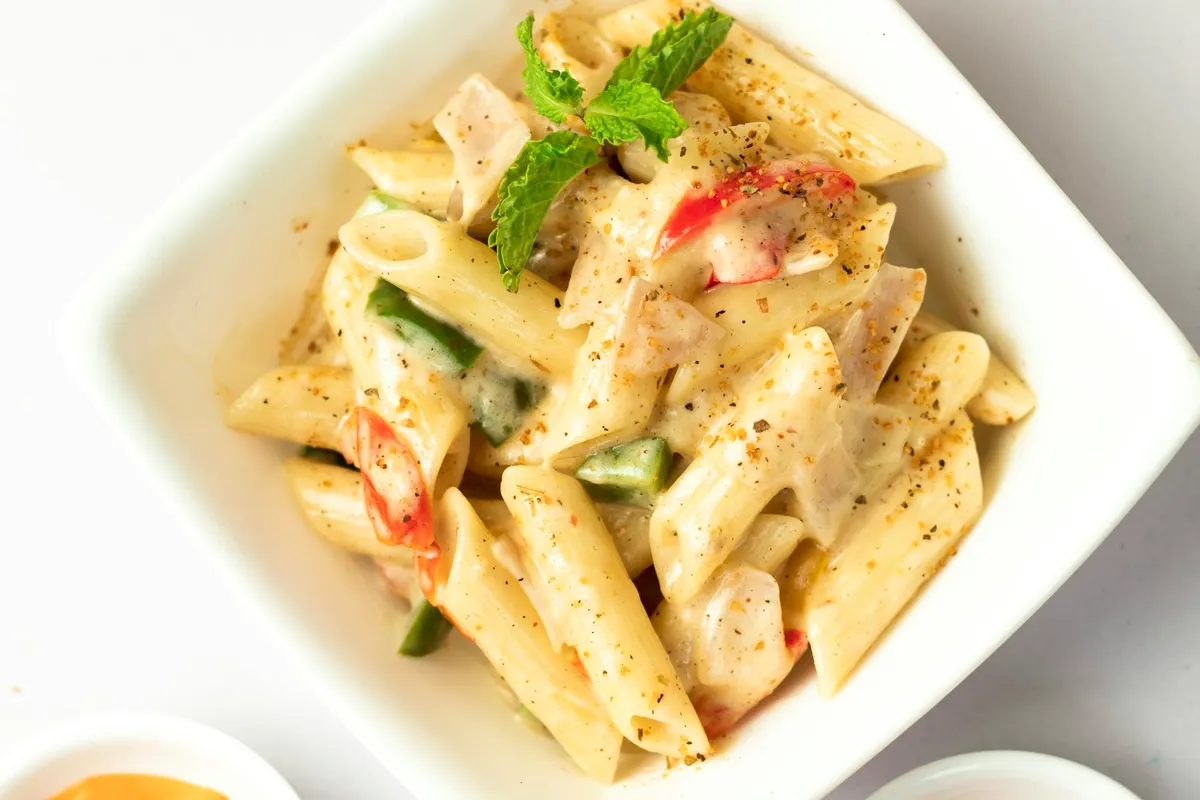
Adjust this recipe
Ingredients
- 400 g pasta, dried
- 400 g cottage cheese, full fat blends smoother
- 60 g parmesan, finely grated, plus more to serve
- 400 g cherry tomatoes, halved
- 4 clove garlic
- 4 tsp olive oil
- 1 lemon, zest only
- 4 pinch black pepper
Method
- Put the pasta on in well salted water. Everything else takes less time than the pasta, so start here.
- Blend the cottage cheese with the garlic, lemon zest and a pinch of salt until completely smooth. Give it longer than you think, at least a minute. Cottage cheese has visible curds and a blender that is nearly finished leaves them in.
- Warm the oil in a wide pan over a low heat. Add the tomatoes and cook for 5 minutes until they slump and release their juice.
- Reserve a mug of pasta water, then drain the pasta.
- Take the pan off the heat completely. Wait about a minute. This is the step that decides whether the sauce works.
- Stir the blended cottage cheese into the warm pan, then add the pasta, the parmesan and a splash of pasta water. Toss until it coats.
- Return to the lowest possible heat for under a minute if it needs loosening further, adding pasta water rather than letting it reduce. Do not let it bubble.
- Finish with black pepper and more parmesan.
Cottage cheese makes a genuinely good pasta sauce. It also splits into something grainy and sad if you treat it like cream, which is why half the people who try this once never try it again.
Two rules and it works every time. Blend it longer than feels necessary, and never let it near a bubbling pan.
Blend it past the point you think it is done
Cottage cheese is curds suspended in liquid. That is the entire product. A blender that has almost finished leaves you with small curds in a smooth background, and once they hit heat they tighten into grains.
Give it a full minute. Stop, scrape the sides, go again. The texture you want is closer to single cream than to anything lumpy. If you can see any texture at all in the jug, it is not finished.
Full fat blends noticeably smoother than the low fat versions. The difference in the finished plate is a few grams of fat and a much better sauce.
Take the pan off the heat, and wait
This is where it goes wrong.
Cottage cheese is high in protein and low in fat, and that combination is exactly what curdles. Protein tightens and squeezes out water when it gets hot, and there is not enough fat in the mix to protect it. Cream survives a simmer because it is around 36 percent fat. Cottage cheese is nearer 4.
So: pan off the heat, wait a minute, then stir the sauce in. The residual warmth is plenty to bring it to temperature. If it needs loosening, use pasta water and the lowest heat your hob will do, and never let it bubble.
If it does split, it cannot be rescued. Nothing brings it back.
The same logic applies anywhere you are replacing cream cheese: the lighter, higher-protein options are exactly the ones that need the pan off the heat.
Pasta water is doing real work
The starch in pasta water is what makes the sauce cling rather than sit in a puddle at the bottom of the bowl. Reserve more than you think you need, and add it a splash at a time.
It also gives you a way to loosen the sauce without heat, which matters here more than in most pasta dishes.
What this gets you
At 29 g of protein a plate, this lands roughly where a chicken pasta does, without the chicken. The cottage cheese is doing all of it.
The chickpea pasta swap above the ingredients adds about 7 g more protein and takes off about 12 g of carbs. It has a firmer, slightly nuttier bite that suits a sauce this creamy, and it is the one swap here worth making on taste as well as macros.
Numbers are estimates from typical ingredient values rather than measurements, and they move with the cottage cheese you buy.
How this compares to the creamy sauce people usually mean
A real alfredo is butter, parmesan and pasta water, and it comes to about 775 calories and 41 g of fat a serving. This sauce is about 560 and 13 g.
That is roughly a third of the fat for the same creamy plate, and the trade is honest rather than free: alfredo tastes strongly of butter and aged cheese, and this tastes mildly of cultured dairy. If the point of the meal is the sauce, go and make the alfredo. If the point is dinner on a Tuesday, this is the one.