Powdered sugar substitutes, and how to make your own
Blend 1 cup of granulated sugar with 1 tablespoon of cornstarch on high for 1 to 3 minutes and you have powdered sugar. Unground, it stays gritty in frosting.
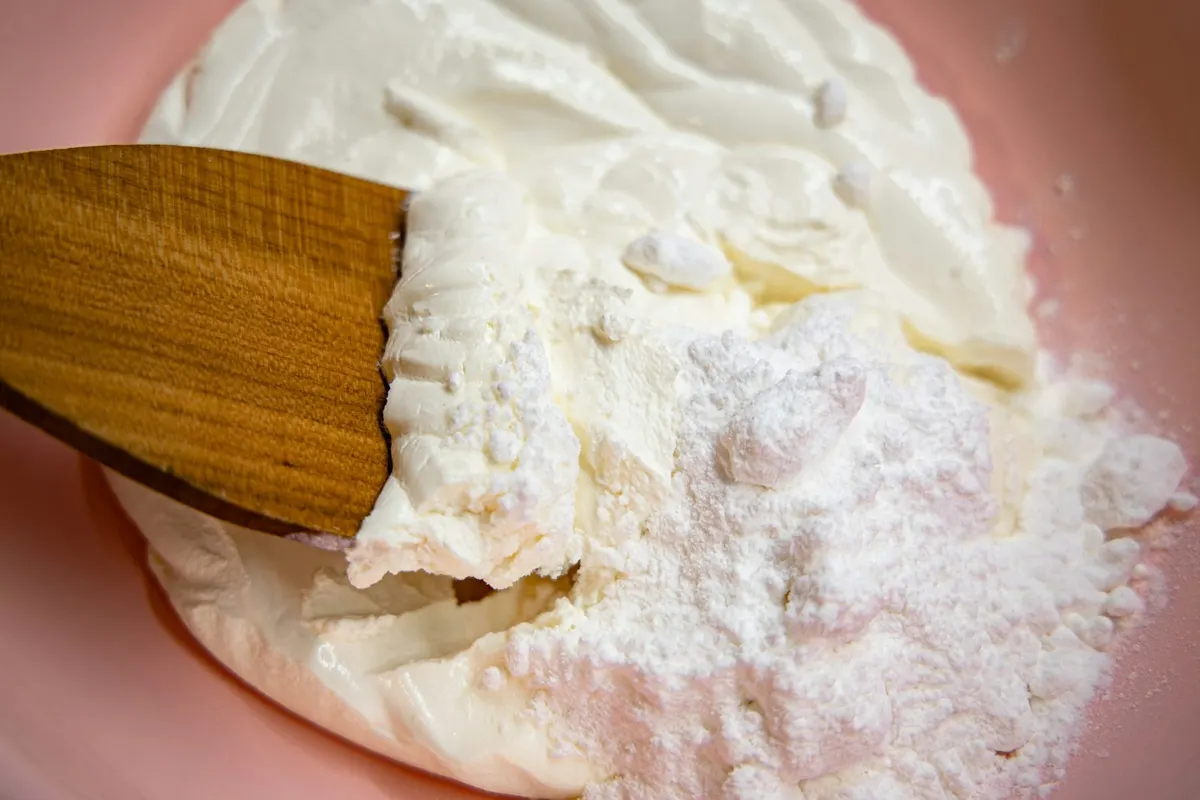
How much sugar to grind
Set the powdered sugar your recipe asks for. Grinding keeps the weight but fluffs up the volume, so you start with less granulated sugar than the cups you end up with.
| Blend | ⅔ cup granulated sugar and 2 tsp cornstarch |
|---|---|
| It makes | a little over 1 cup, so measure out what the recipe needs and keep the rest |
Blend on high for 1 to 3 minutes, then let the dust settle before you open the lid. Cups are US cups, by USDA's weights; freshly ground sugar is fluffier, so you may get a little more. Weighing instead? The weight does not change: grind the grams the recipe asks for, with about 4% of them cornstarch. Cornflour, in Britain.
How they compare, per cup
Most substitute guides tell you what works and stop there. If you are choosing partly on macros, here are the numbers side by side.
Calories in one cup, measured each way. A cup of granulated sugar holds two thirds more sugar than an unsifted cup of powdered, and sifting before you measure takes off a sixth.
| Per cup | kcal | Protein | Carbs | Fat |
|---|---|---|---|---|
| Powdered sugar, unsifted | 467 | 0 g | 120 g | 0 g |
| Homemade, ground to the same weight | 464 | 0 g | 120 g | 0 g |
| Powdered sugar, sifted | 389 | 0 g | 100 g | 0 g |
| Granulated sugar | 774 | 0 g | 200 g | 0 g |
Typical values, rounded. Brands vary, so treat these as estimates for comparing options rather than exact figures.
Every option, and when to use it
Which one works depends on what the ingredient is doing in the recipe, so here is the full list, with where each one fails.
| Use | How much | Best for |
|---|---|---|
| Granulated sugar and cornstarch, blended | 1 tbsp cornstarch per cup of sugar, on high for 1 to 3 minutes | frosting, glazes and dusting Watch out: a weak blender leaves it gritty |
| Granulated sugar, blended on its own | the same weight, used straight away | anything you are making today Watch out: with no starch it clumps if you store it |
| Icing sugar | 1:1 | anything Watch out: none: it is the British name, milled without starch |
| Granulated sugar, unground | by weight, in baking only | cookies and cakes that call for powdered sugar Watch out: gritty in frosting and glazes, and crisper in a bake |
| Superfine or caster sugar | by weight | meringues and whipped cream Watch out: finer than granulated, still too coarse for a smooth icing |
| Ermine frosting instead | flour cooked in milk, then sugar and butter | when the powdered sugar was for frosting Watch out: about an hour, most of it cooling |
| A dissolved-sugar glaze | granulated sugar melted into a little hot milk or juice | glazing cakes, buns and doughnuts Watch out: sets thinner and clearer than a powdered sugar glaze |
| Sucralose and cornstarch, blended | 3/4 cup Splenda Granulated and 2 tbsp cornstarch | dusting desserts Watch out: Splenda's own recipe is for dusting, not frosting |
| Erythritol or allulose sweetener, blended | ground the same way, cup for cup | keto and sugar-free frosting Watch out: erythritol can leave a cool aftertaste |
Powdered sugar is granulated sugar ground to a powder, with a little starch to stop it caking, so the substitute that works everywhere is the one you grind yourself. The swaps that do not involve a blender each fail somewhere, mostly in frosting, which is where most powdered sugar goes.
How to make powdered sugar
Blend 1 tablespoon of cornstarch with each cup of granulated sugar in a powerful blender until it turns white and fluffy (Love and Lemons). Allrecipes uses one to two tablespoons, and its readers had the best luck grinding a cup at a time, in a small blender or a coffee grinder (Allrecipes).
If you weigh, do what the pastry chef Emily Kellogg told Serious Eats she does: blend the sugar on high for one to three minutes, add 3 to 4% of its weight in cornstarch, and sift it (Serious Eats). That lines up with the bag. Domino’s specification puts its powdered sugar at 2 to 5% cornstarch and the rest sugar (Domino).
The honest catch is the blender. In the same article, the pastry chef Joy Wilson says granulated sugar never gets quite as fine at home, and it sends sugar dust everywhere. A weak blender gives you something between the two, which is fine for dusting and a glaze, and a little gritty in a smooth buttercream.
Two smaller things:
- The volume grows. Grinding keeps the weight and adds air: a cup of granulated sugar weighs 200 g and an unsifted cup of powdered 120 g by USDA’s measures, so 2/3 cup of granulated makes a little over a cup. The calculator above does that sum.
- The starch is optional if you will use it straight away. It is only there to stop the powder caking. Organic powdered sugars often use tapioca starch, which Stella Parks preferred for its neutral flavour, since cornstarch can taste faintly metallic in an uncooked icing.
Can you use granulated sugar instead of powdered sugar?
In frosting and glazes, no. Butter and cream cheese do not have enough water to dissolve the crystals, so they stay whole and the frosting is gritty, which is exactly what the Reddit thread at the top of the results found (Reddit). It is also the wrong amount. A cup of granulated sugar holds two thirds more sugar than a cup of powdered, so a cup-for-cup swap oversweetens as well.
In baking it can work, by weight. Recipes that call for powdered sugar in the dough, such as shortbread and some sugar cookies, use it because it dissolves fast and makes the crumb soft and tender. Granulated sugar gives a less tender, crisper result (Serious Eats).
Powdered sugar instead of granulated sugar
Weigh it and the swap is 1:1; by the cup, use about 1 2/3 cups of unsifted powdered sugar for each cup of granulated. Expect a softer bake that spreads, browns and crisps less: powdered sugar dissolves rather than creaming air into the butter, and its starch soaks up moisture (Serious Eats). That is fine in a tender cookie or a shortbread. In a cake that relies on creamed butter and sugar to rise, it costs you height.
Frosting without powdered sugar
Make an ermine frosting, also called flour or boiled-milk frosting. You cook flour and milk into a thick paste with granulated sugar, which dissolves in the heat, cool it, and beat it into soft butter. King Arthur’s version uses 3/4 cup of granulated sugar, 1/4 cup of flour, a cup of milk and 12 tablespoons of butter, for about 2 1/2 cups, enough for a 9 by 13 inch cake (King Arthur).
It is lighter and less sweet than a powdered sugar buttercream, and Stella Parks compares it to whipped cream (Serious Eats). Its one failure is temperature: beat the paste into the butter before it has cooled and the butter melts and the frosting breaks. If a cream cheese frosting is the one going wrong, cream cheese substitutes has the three fixes for a runny one.
A glaze without powdered sugar
Warm granulated sugar with a little milk, water or lemon juice over a low heat, stirring until you can no longer feel any grit, then take it off before it boils. Pour it while it is warm. It sets thinner and clearer than a glaze made with powdered sugar, more like the shell on a doughnut, and it can turn grainy again if it boils. For an opaque white glaze that holds a drizzle, homemade powdered sugar is the better route.
Sugar-free and keto powdered sugar
The same method works with a sweetener. Splenda’s own recipe blends 3/4 cup of its granulated sweetener with 2 tablespoons of cornstarch into a powder, and suggests it for dusting desserts (Splenda). Erythritol and allulose sweeteners grind the same way and are the usual choice for a keto frosting.
Two cautions. The cornstarch in a homemade version is still carbohydrate, a small amount at 8 g a tablespoon. And erythritol can leave a cool aftertaste and has a heart-health question hanging over it, which brown sugar substitutes covers with the study behind it.
Icing sugar, caster sugar and powdered sugar
Icing sugar is the British name for powdered sugar, also sold in America as confectioners’ sugar or 10X, and the two swap 1:1. The numbers on an American bag, 6X, 10X or 12X, refer to the mesh used to sift it: the higher, the finer (Serious Eats).
They are not quite identical. American powdered sugar is 2 to 5% cornstarch, as above, while a British icing sugar such as Silver Spoon’s has no starch at all. It uses tricalcium phosphate to stop caking, at 0.5 to 1% of the bag (Silver Spoon). In nearly every recipe that makes no difference. Where you might notice it is in an uncooked icing, where the cornstarch can add that faint taste.
Caster sugar is something else: granulated sugar with smaller crystals, about 0.1 to 0.3 mm against 0.3 to 0.5 mm for ordinary granulated, by Serious Eats’ figures. It dissolves faster in a meringue, but it is still a crystal, so it will not stand in for icing sugar in an icing.
Sifted or unsifted: why the cup matters
USDA weighs an unsifted cup of powdered sugar at 120 g and a sifted cup at 100 g, so the order of the words in a recipe changes the amount by a sixth. “1 cup powdered sugar, sifted” means measure, then sift. “1 cup sifted powdered sugar” means sift, then measure, and gets less. In frosting the difference is sweetness; in a dough it can be texture. Weighing removes the question.
Sift it either way if it has clumped. Domino notes that powdered sugar which has taken on moisture cannot really be restored, because of the cornstarch, so keep it sealed and somewhere dry (Domino).
Common questions
Make it: blend granulated sugar with 1 tablespoon of cornstarch per cup on high for 1 to 3 minutes. Grinding keeps the weight but fluffs up the volume, so 2/3 cup of granulated makes a little over a cup. If it is for frosting and you have no blender, make an ermine frosting, which uses granulated sugar cooked into a flour and milk paste.
Blend it in a powerful blender or a spice grinder until it is a fine powder, 1 to 3 minutes, with 1 tablespoon of cornstarch per cup to stop it clumping. Let the dust settle before you open the lid, and sift it. Small batches grind finer than big ones.
Homemade powdered sugar is the best match. Otherwise, warm granulated sugar with a little milk, water or citrus juice over a low heat, stirring until no grit is left, and pour it while warm. It sets thinner and clearer than a powdered sugar glaze, and boiling it can make it turn grainy again.
Weigh them, and the swap is 1:1. By the cup, use about 1 2/3 cups of unsifted powdered sugar for each cup of granulated, since a cup of powdered weighs 120 g against 200 g by USDA's measures. Expect a softer, more tender bake that browns less, because powdered sugar dissolves rather than creaming with the butter.
Not as it is. The crystals stay whole in butter and cream cheese, so the frosting is gritty, and a cup of granulated is two thirds more sugar than a cup of powdered. Grind it first, or make an ermine frosting, which dissolves granulated sugar in a cooked milk paste.
Yes, under its British name, and they swap 1:1. The one difference is the anti-caking agent: American powdered sugar is 2 to 5% cornstarch, while a British icing sugar such as Silver Spoon's uses tricalcium phosphate instead, under 1% of the bag. Caster sugar is a different thing, a fine granulated sugar.
Yes. Blend a granulated sweetener with a little cornstarch the same way: Splenda's own recipe is 3/4 cup of its granulated sweetener with 2 tablespoons of cornstarch, for dusting desserts. Erythritol and allulose sweeteners grind the same way for frosting. The cornstarch still carries a little carbohydrate.