Healthy potato soup, creamy without the cream
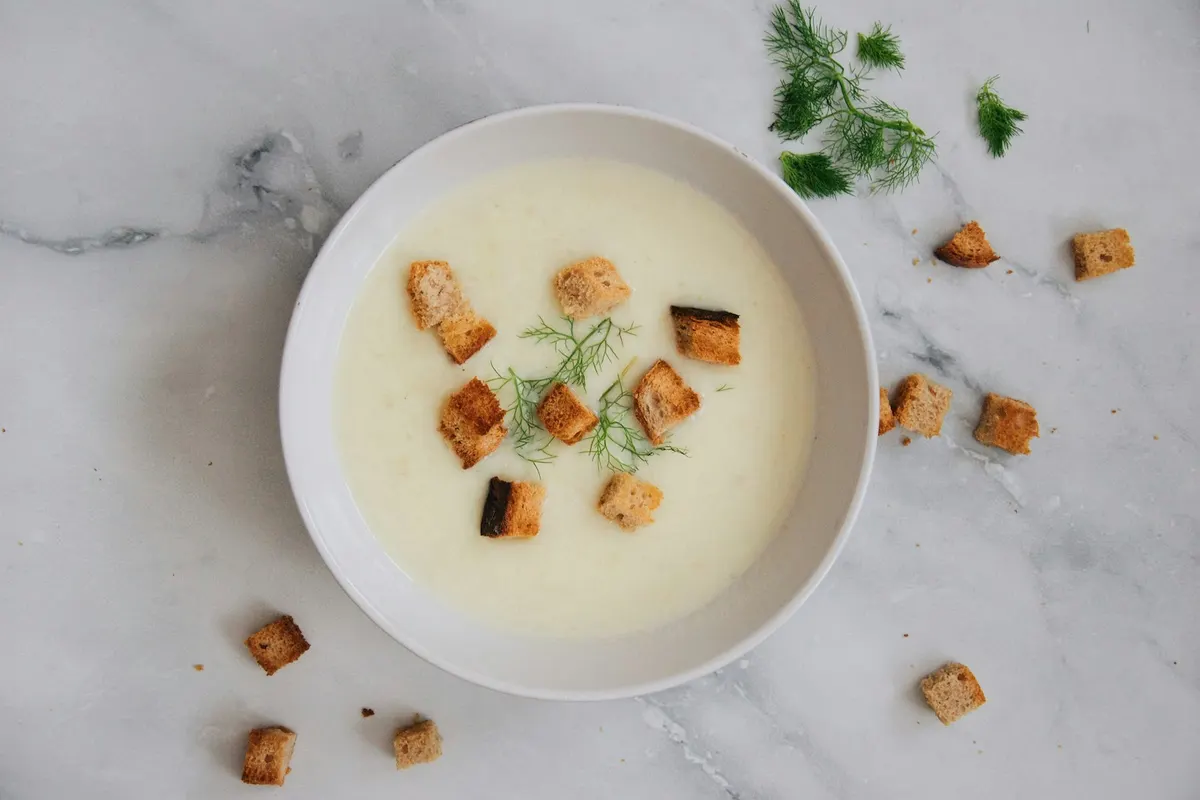
Blend half the pot and potato soup turns creamy with no cream at all. A loaded bowl here is about 398 calories, and the soup itself is 279 before the toppings.
Adjust this recipe
Ingredients
- 20 g unsalted butter Out of butter?
- 160 g onion, chopped
- 100 g celery, finely chopped
- 4 garlic cloves, crushed
- 1 tsp dried thyme
- 800 g potatoes, Yukon Gold or russet, cut into 2 cm (3/4 inch) chunks, peeled if you like
- 880 ml reduced-sodium chicken stock, or vegetable stock Out of chicken broth or stock?
- 400 ml 2% milk, semi-skimmed in the UK
- 4 bacon slices, rashers in the UK, cooked crisp and crumbled, to serve
- 80 g sour cream, to serve Out of sour cream?
- 40 g sharp cheddar, mature cheddar in the UK, grated, to serve
- 8 g fresh chives, snipped, to serve
Method
- Melt the butter in a large pan over a medium heat. Add the onion and celery and cook for 6 to 8 minutes, until soft but not coloured, then stir in the garlic and thyme for 30 seconds.
- Add the potatoes and the stock, bring it to the boil, then cover and simmer for about 15 minutes, until a chunk of potato breaks apart when you press it against the side of the pan.
- While it simmers, cook the bacon in a dry frying pan until crisp, drain it on kitchen paper and crumble it.
- Take the soup off the heat and blend about half of it with a stick blender, in short bursts, leaving the rest in chunks. Stop as soon as the blended part is smooth: potatoes worked too long turn gluey.
- Stir in the milk and warm it through over a low heat without letting it boil. Season with black pepper, then taste before adding salt, remembering the bacon and cheese are still to come.
- Ladle into bowls and top each one with the sour cream, cheddar, bacon and chives.
Potato soup turns creamy without any cream if you blend half the pot, because the potatoes’ own starch does the thickening. A loaded bowl here comes to about 398 calories with 17 g of protein by our estimate, and the soup itself is only 279. The rest is the bacon, cheddar and sour cream on top, which is where the choices are.
Is potato soup good for you?
It is mostly potato, so it is mostly carbohydrate: 35 g of the 48 in a bowl come from the 200 g of potato in it. That potato also brings about 4 g of fibre and 850 mg of potassium, 18 percent of the 4,700 mg daily value, by USDA values.
The soup on its own is modest. Per bowl:
| Part of the bowl | kcal | Protein | Fat | Sodium |
|---|---|---|---|---|
| The soup, before toppings | 279 | 11 g | 6 g | about 590 mg |
| Bacon, 1 slice | 37 | 3 g | 3 g | about 134 mg |
| Cheddar, 10 g | 41 | 2 g | 3 g | about 65 mg |
| Sour cream, 20 g | 40 | 0 g | 4 g | about 6 mg |
| Chives | 1 | 0 g | 0 g | none |
The toppings are about 30 percent of the calories and almost two thirds of the fat. That is not an argument against them. It is where to look if a bowl needs to be lighter, because the soup underneath is already lean.
Creamy potato soup without cream
Blend half the pot. A potato is mostly starch and water, and once it is cooked and broken down the starch thickens the liquid around it, the same way it thickens a mash. Half blended gives you a smooth, velvety body with chunks of potato still in it, and there is no cream anywhere in this recipe.
Two things keep it smooth. Blend in short bursts and stop as soon as it is smooth, because potato starch worked hard goes gluey, which is the one texture no amount of stirring fixes. And add the milk at the end, over a low heat: milk boiled hard in a starchy soup catches on the bottom and can split.
The sour cream is the easy cut, the bacon is the salt
The swap on this page replaces the sour cream with fat-free Greek yogurt, which saves 28 calories and 4 g of fat a bowl and adds 2 g of protein. It sits on top of a soup that has come off the heat, so the splitting that plagues yogurt in a simmering pan does not come into it.
The bacon is the line to watch for sodium. One slice brings about 134 mg, more than the cheddar and the sour cream together. Crumbled over the top it goes a long way, which is why this recipe uses one slice a bowl rather than cooking it into the soup.
High protein potato soup
At 17 g a loaded bowl, it is a fair lunch, and the potato is never going to make it a high-protein one. Two additions move it without changing what it is:
| Blended into each bowl | Protein | kcal |
|---|---|---|
| Cannellini beans, 60 g drained | +4 g | +69 |
| Cottage cheese, 60 g | +7 g | +59 |
White beans are the quieter choice: they vanish into the blended half and add fibre as well. Cottage cheese adds more protein but has to go in off the heat, blended completely smooth, or it splits.
What is Julia Child’s 3 ingredient potato soup?
It is potage parmentier, leek and potato soup, from Mastering the Art of French Cooking: potatoes, leeks and water, simmered and mashed or blended, with butter or cream stirred in at the end if you want them. The three ingredients are the soup, and the enrichment is optional.
It is also the lighter soup, and it is worth saying so. Made with 200 g of potato and 60 g of leek a bowl, it comes to about 190 calories before any butter goes in, by USDA values. This one trades about 200 calories for the loaded baked potato flavour and 12 g more protein. If calories are the only thing you are counting, make the French one.
Is potato soup good for weight loss?
A bowl is a lot of food for its calories, because most of it is water, stock and milk. At about 370 to 398 calories with 17 to 19 g of protein, it fits a lunch or a light dinner. What turns it into a heavy meal is portion and toppings: a second slice of bacon and a heaped spoon of sour cream add about 80 calories between them.
Where the calories are
Per bowl, which is a quarter of the pot.
| Part of the bowl | kcal | Protein | Carbs | Fat |
|---|---|---|---|---|
| Potatoes, 200 g | 154 | 4 g | 35 g | 0 g |
| Bacon, cheddar, sour cream and chives | 119 | 6 g | 1 g | 10 g |
| Milk, 100 ml | 50 | 3 g | 5 g | 2 g |
| Butter, 5 g | 36 | 0 g | 0 g | 4 g |
| Onion, celery and garlic | 24 | 1 g | 6 g | 0 g |
| Stock, 220 ml | 15 | 3 g | 1 g | 0 g |
| Per serving | 398 | 17 g | 48 g | 16 g |
The swap, and what it is worth
| Swap | kcal | Protein | Carbs | Fat | Running total |
|---|---|---|---|---|---|
| Sour cream to fat-free Greek yogurt | −28 | +2 g | 0 g | −4 g | 370 kcal, 19 g protein |
What goes wrong
A gluey soup. The blending went on too long, or went through a food processor. Short bursts, and only half the pot.
A soup that catches or splits. The milk boiled. Warm it through gently at the end rather than cooking it with the potatoes.
A flat-tasting soup. Potatoes need salt more than most things, and reduced-sodium stock gives them less to start with. Taste at the end, once the milk is in, and season properly before the toppings go on.
A solid block the next day. The starch keeps setting as the soup cools. Loosen it with stock or milk as you reheat it.
Storing and reheating
Keep leftovers, without the toppings, in the fridge for 3 to 4 days, the USDA guidance for leftovers. Reheat gently and add the toppings fresh. It does not freeze well: potato turns grainy and the milk can separate as it thaws, so if you want to cook ahead, freeze the soup before the milk goes in and add it when you reheat.
Every figure here is an estimate from USDA values rather than a measurement. Why recipe macros are estimates explains how far they move with what you buy.
Where next
Worth cooking next:
- Healthy broccoli cheddar soup, and what Panera's bowl really costsPanera's bowl is 360 calories with 1,330 mg of sodium by its own figures. This one is about 335 calories with 17 g of protein and about half the sodium.
- Lighter mashed potatoes that are still worth eatingGreek yogurt for the sour cream keeps mash creamy and adds protein. Why floury potatoes and warm milk matter more to the texture than the fat does.
- Ground turkey chili that does not taste like it is missing somethingTurkey chili at 25 g protein a bowl, without the dryness turkey usually brings. Why you brown it in two batches and what replaces the fat you lost.
Cooking it as part of a week? ReciPop plans seven days of meals around the time you have, the appliances you own and how many you are feeding, then turns them into one grocery list sorted by aisle. How the weekly plan works