How much cornstarch to thicken, by the cup
One tablespoon of cornstarch thickens one cup of liquid to a sauce that coats a spoon. The amount for every texture, in spoons and in grams, and how to add it.
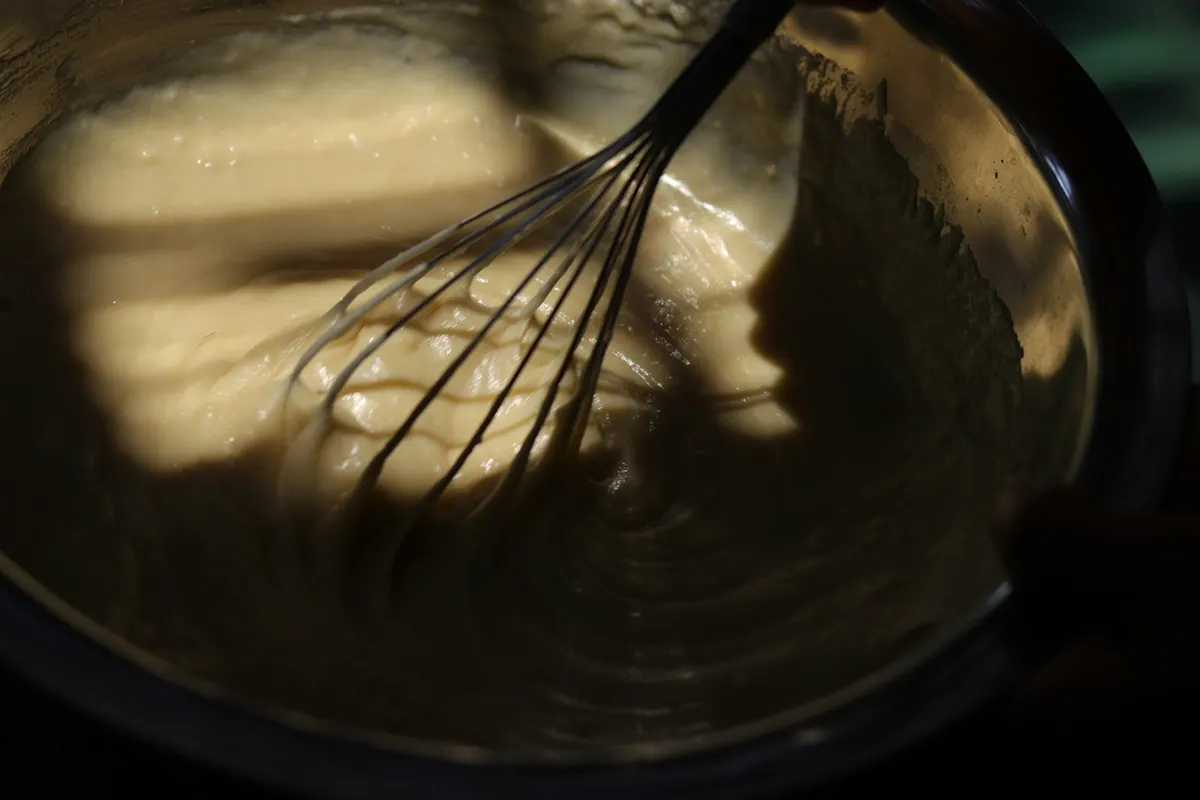
One tablespoon of cornstarch thickens one cup of liquid to a sauce that coats the back of a spoon. Whisk it into an equal amount of cold water first, stir that into the simmering pan, and give it two full minutes. Use half as much for a brothy soup, and twice as much for a pie filling you want to slice.
That is the whole answer for most pans. The rest of this page is the part almost nobody says out loud.
The amount depends on how thick you want it, not what is in the pan
Search this question and you get one ratio, then a list of dishes. Soup gets a number, sauce gets a number, stew gets a number. It reads authoritative and it is mostly noise, because a brothy chicken soup and a chowder are both soup and they need completely different amounts.
What actually decides the quantity is the texture you are aiming at. Once you know that, the dish is only a hint about which texture you probably want.
How much cornstarch for your pan
Set how much liquid you are thickening, then read the row for the texture you want. The amounts are for cornstarch, which is what a UK kitchen calls cornflour.
| How thick you want it | Cornstarch | In grams |
|---|---|---|
| Barely thickeneda brothy soup with a little body | 1 tbsp | 8 g |
| Coats the back of a spoongravy, pan sauce, most soups, stew, chili | 2 tbsp | 16 g |
| Thick and glossystir-fry glaze, sweet and sour, anything that should cling | 3 tbsp | 24 g |
| Sets when it coolsfruit pie filling you want to slice | 4 tbsp | 32 g |
Whisk your amount into the same volume of cold water before it goes anywhere near the pan, then simmer for two full minutes. Cups are US cups, 240 ml. Gram weights are worked out from USDA FoodData Central SR Legacy, which puts one cup of cornstarch at 128 g.
Which row for which dish
Barely thickened is for a soup that should still be a soup. You are giving the broth a little body so it clings to the spoon rather than running off it. Most chicken noodle and most vegetable soups want this and nothing more.
Coats the back of a spoon is the default and the one most people are actually looking for. Gravy, a pan sauce, a chowder, a stew, chili. Draw a line through the sauce on the back of a spoon with your finger; if the line holds for a second before it closes, you are there.
Thick and glossy is for anything that should cling to what it is poured over. Stir-fry glazes, sweet and sour, the sauce on orange chicken. This is where cornstarch beats flour outright, because the shine is the point and flour sets matte.
Sets when it cools is fruit pie filling. It will look alarmingly loose while it is hot and firm up completely as it cools, which is why so many first pies end up soup: the cook adds more starch to hot filling that was always going to set. Trust the amount and let it cool.
Cold water first, always
Cornstarch tipped straight into a hot pan turns into lumps you cannot whisk out, because the outside of each clump gelatinises instantly and seals the dry powder inside. Mixing it with cold water first separates the grains so they can swell one at a time.
Cold, not warm. Warm water starts the reaction in the bowl and you get a claggy paste before it reaches the pan.
The ratio for the slurry itself is equal parts by volume: one tablespoon of cornstarch to one tablespoon of cold water. You can go up to two parts water if the paste is too stiff to pour, and it makes no difference to the result because the extra water boils off.
Why it is not thickening
You did not get it hot enough. This is the answer nine times out of ten. Cornstarch needs to reach a proper simmer to gelatinise, and a pan that is hot but not bubbling will stay thin no matter how much you add. Give it two full minutes at a simmer before you decide it has failed. Adding more starch to a pan that was never hot enough is how you end up with a gluey mess ten minutes later.
You held it over heat too long. The opposite failure, and it looks identical. Cornstarch breaks down under sustained heat and acid, so a sauce that thickened beautifully can go thin again if it sits on the hob. Take it off once it is where you want it.
Your dish is acidic. Tomato sauces, anything with a lot of lemon or vinegar, and sweet and sour in particular will thin cornstarch faster. Add the slurry at the end, thicken, and serve.
You are counting the wrong liquid. Measure what is actually in the pan, not what the recipe started with. A stew that has been reducing for an hour has less liquid in it than the recipe listed, and thickening for the original volume will overshoot badly.
In grams
One US cup of cornstarch weighs 128 g, which puts a tablespoon at exactly 8 g and a teaspoon at about 2.7 g. So the default row, one tablespoon per cup of liquid, is 8 g per 240 ml.
Weight is worth using if you are cooking in metric anyway, because 8 g on a scale is more repeatable than a heaped or levelled tablespoon, and cornstarch is one of the ingredients where the difference between heaped and level is close to double.
Source: USDA FoodData Central, SR Legacy, FDC ID 169698, one cup of cornstarch at 128 g. The tablespoon and teaspoon figures are that number divided down.
Cornstarch or flour
Cornstarch needs half as much as flour for the same thickness, sets glossy and slightly translucent, and thickens in about two minutes. Flour needs twice as much, sets opaque and matte, and needs about five so the raw flour taste cooks out.
The one that decides it for a lot of people is what happens the next day. Flour-based sauces reheat and freeze well; cornstarch-based ones can turn thin and slightly weepy on day two. If you are cooking ahead, use flour.
There is a fuller comparison, including roux and beurre manié with the ratio for each, on how to thicken gravy.
If you have run out
Arrowroot is the closest swap and needs about two thirds of the cornstarch, though it sets clearer and glossier, which looks right in a glaze and wrong in a roast gravy. Potato starch, tapioca and plain flour all work with their own ratios and their own trade-offs.
The full list, with the ratio each one needs and where each one fails, is on our cornstarch substitutes page. If you are reading from the UK, cornstarch is what you know as cornflour, and that page also covers why American corn flour is a different product that will not thicken anything.
Does it change the macros
Hardly, and it is worth saying plainly on a site that spends most of its time on macros. A tablespoon of cornstarch is around 30 calories and 7 g of carbohydrate spread across a whole pan, so a serving carries a gram or two of carbohydrate and no protein or fat worth counting.
If you are watching macros in a sauce, the butter, the cream and the portion size are all far bigger numbers than the thickener. Figures here are estimates from typical ingredient values rather than measurements.