High protein mac and cheese that is still just mac and cheese
Classic stovetop mac and cheese already carries about 31 g of protein a bowl, from the cheddar and the pasta. What chickpea pasta, cottage cheese and chicken add.
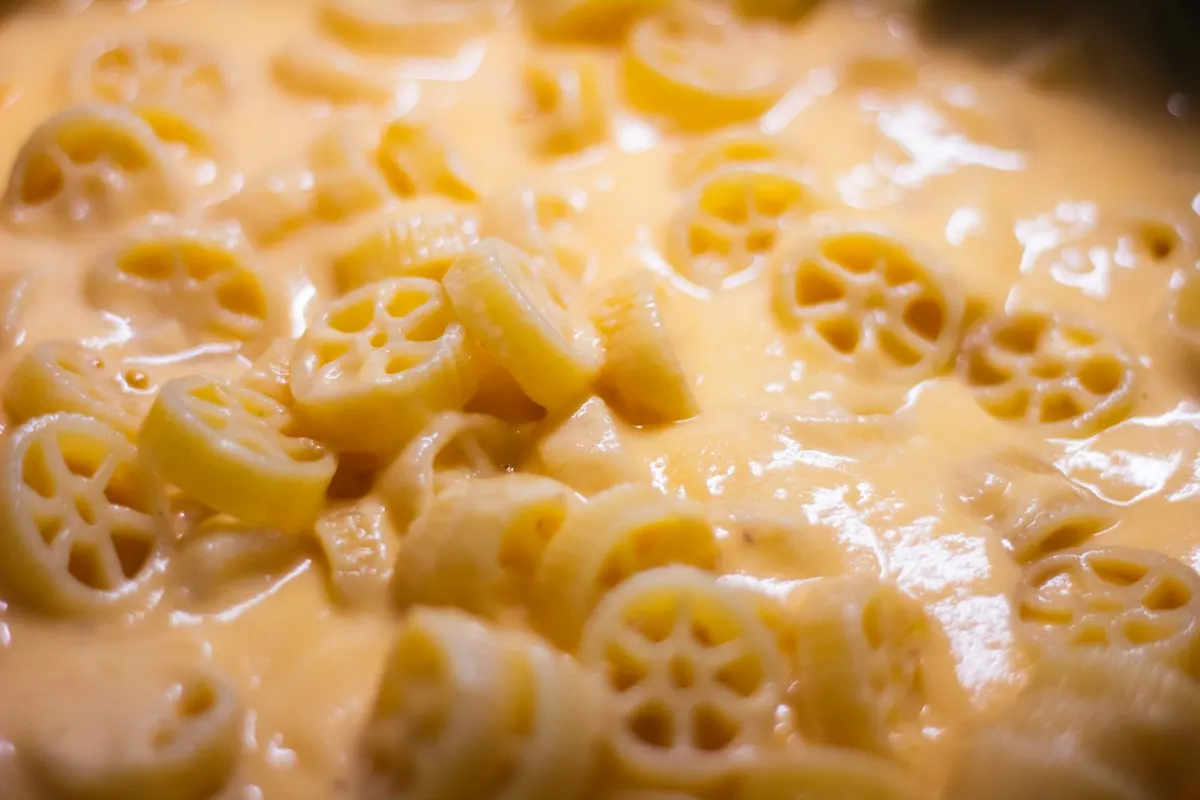
Adjust this recipe
Ingredients
- 340 g short pasta, dried, such as elbow macaroni
- 32 g butter Out of butter?
- 24 g plain flour, all-purpose flour in the US
- 600 ml whole milk, warmed
- 112 g cream cheese Out of cream cheese?
- 200 g mature cheddar, sharp cheddar in the US, grated
- 1 tsp Dijon mustard
Method
- Bring a large pan of well-salted water to the boil and cook the pasta 2 minutes short of the packet time. It finishes in the sauce, and pasta cooked to the full time is soft by the time it reaches the bowl.
- While it cooks, melt the butter in a second pan over a medium-low heat. Stir in the flour and let it cook for a minute, until it smells toasted rather than raw.
- Add the warm milk a splash at a time, whisking after each one so no lumps form, then let it simmer gently for 3 to 4 minutes, until it coats the back of a spoon.
- Take the pan off the heat. This is the step that decides whether the sauce is smooth or grainy, and it is the one most recipes rush.
- Whisk in the cream cheese and the mustard until smooth, then add the cheddar a handful at a time, stirring each one in before the next. The heat already in the sauce is enough to melt it. If you are swapping in cottage cheese, blend it completely smooth first and whisk it in where the cream cheese goes.
- Drain the pasta, keeping a mugful of the cooking water. Chickpea pasta gets a quick rinse at this point, which its makers recommend and which takes the foam off it.
- Stir the pasta into the sauce and loosen it with a splash of the cooking water. Aim for looser than you want to eat it, because it thickens as it stands. Season with salt and plenty of black pepper, and eat it straight away.
Mac and cheese is already a high protein dish, which is the part most recipes chasing that phrase skip past. A bowl of the classic above carries about 31 g by our estimate, most of it from the cheddar and the pasta, with no cottage cheese and no protein powder in it. Chickpea pasta takes it to 37 g. A chicken breast takes it past 60.
Where the protein in mac and cheese comes from
Per serving, which is a quarter of the pan.
| Part of the bowl | Protein | kcal |
|---|---|---|
| Cheddar, 50 g | 12 g | 202 |
| Pasta, 85 g dried | 11 g | 315 |
| Whole milk, 150 ml | 5 g | 94 |
| Cream cheese, 28 g | 2 g | 98 |
| Butter, flour and mustard | 1 g | 80 |
| Per serving | 31 g | 789 |
The cheddar is the biggest line and it brings about 17 g of fat with it, which is the trade this dish is built on. Cutting the cheese is the one change that makes it stop tasting like mac and cheese, so the rest of this page leaves it alone.
How to increase protein in mac and cheese
Ranked by what each one adds to a bowl, with the calories that come with it.
| Add to each bowl | Protein | kcal |
|---|---|---|
| Cooked chicken breast, 100 g | +31 g | +165 |
| Tuna, canned in water and drained, 100 g | +19 g | +86 |
| Blended cottage cheese, 60 g, into the sauce | +7 g | +59 |
| Fat-free Greek yogurt, 60 g, off the heat | +6 g | +35 |
| Extra cheddar, 20 g | +5 g | +81 |
| Frozen peas, 80 g | +4 g | +62 |
Chicken is worth more than everything else on that list put together. That is the honest answer to the question, and it is the same answer as on the high protein pasta roundup: the protein is what you put on the pasta, not which box it came out of.
Two notes on the rest. Extra cheddar is the worst deal here, because it brings about 7 g of fat with its 5 g of protein. Peas are worth adding for the vegetables and the fibre rather than the protein, whatever the packet claims.
USDA FoodData Central values for the chicken, tuna and peas, our own tables for the dairy.
The two swaps, and what each is worth
| Swap | kcal | Protein | Carbs | Fat | Running total |
|---|---|---|---|---|---|
| Pasta to chickpea pasta | −27 | +6 g | −12 g | +3 g | 762 kcal, 37 g protein |
| Cream cheese to blended cottage cheese | −71 | +1 g | 0 g | −8 g | 691 kcal, 38 g protein |
The pasta numbers compare USDA’s figure for dried wheat pasta with Banza’s label for chickpea elbows, which is one brand of several and they do differ. Lentil pasta carries a little more protein again.
The cottage cheese swap is the app’s rule for cream cheese, and at 28 g a serving it is a fat swap rather than a protein one. It still earns its place: 8 g of fat for one ingredient you blend for a minute. If you want cottage cheese to do real protein work here, put 60 g into the sauce as well as swapping, which is the row in the table above.
What goes wrong
A grainy, oily sauce. Cheese heated too hard squeezes out its fat and the proteins clump, which is what those little grains are. Take the pan off the heat before any cheese goes in, add it in handfuls, and never let it boil afterwards. A sauce that splits is not rescued by more heat.
Chickpea pasta turned to mush. It has very little grace period. Banza’s own cooking guidance says to check it one to two minutes before the packet time, to expect foam, and to rinse it after draining. Since our pasta comes out 2 minutes early anyway, taste it at the point where you would normally still be waiting.
Cottage cheese you can see. Unblended curds survive the sauce and give the whole thing away. Blend it until it is glossy, not just broken up, as on the cream cheese substitutes page.
A sauce that sets solid. Starch keeps thickening as it cools, so a sauce that looks right in the pan is stiff in the bowl. Leave it looser than you want it.
Can you make high protein mac and cheese without cottage cheese?
Yes, and the recipe above is one. It reaches about 31 g a serving from cheddar, milk and pasta alone, and about 37 g with chickpea pasta. Adding chicken gets you past 60 g, and tuna to about 50 g, without any dairy you would not already recognise.
Cottage cheese is on almost every recipe ranking for this dish because blended it is the cheapest protein in the fridge, not because the dish needs it. If you like it, the swap and the extra 60 g are both worth having. If you do not, nothing here falls apart without it.
Is high protein mac and cheese healthy?
It is a bowl of pasta and cheese, and no amount of swapping changes that. What the swaps change is the arithmetic: about 789 calories and 31 g of protein as written, about 691 and 38 g with both applied, and about 856 calories with 69 g of protein once a chicken breast goes in. Whether that fits your day is a question about your day, not about the dish.
Is it low carb?
No, in any version. The classic is about 77 g of carbohydrate a serving and chickpea pasta takes it to about 65 g, of which a good share is fibre. That is a meaningful cut and it is nowhere near a low-carb dish, so if you are eating for ketosis this is the wrong page. Roasted cauliflower with a cheese sauce is the honest answer there, and it is a different dish rather than a version of this one.
Macaroni cheese, and the baked version
In Britain the same dish is macaroni cheese, and it usually goes into the oven. Tip the finished pan into a dish, scatter breadcrumbs and a little more cheddar over the top, and bake at 200C (180C fan, 400F) for 15 to 20 minutes, until it browns at the edges. The crumbs and the extra cheese are not in the numbers above, and the oven costs you the loose texture the stovetop version has, which is the trade for a brown top.
Storing and reheating
Leftovers keep 3 to 4 days in the fridge and 3 to 4 months in the freezer, the USDA guidance for leftovers generally. Reheat with a splash of milk stirred through first, gently, until it is hot all the way through at 74C (165F). Without the milk the sauce comes back as a solid block, which is the starch doing exactly what it did in the pan.
Every figure here is an estimate from typical ingredient values and product labels rather than a measurement. Why recipe macros are estimates covers how far they move with the brands you buy.
Where next
This recipe is one of the dishes in High protein meal prep: one Sunday, five days, about 100 g of protein a day.
Worth cooking next:
- Cottage cheese pasta sauce, blended properlyA creamy pasta sauce from cottage cheese at 29 g protein a plate. Why it splits in a hot pan, how to stop it, and the blending step nobody skips twice.
- Alfredo sauce without heavy cream, which is to say alfredo sauceReal alfredo is butter, parmesan and pasta water, and never had cream in it. Three ingredients, one technique, and the two mistakes that split the sauce.
- High protein chicken pasta, where the protein is the chicken and not the boxChicken and tomato pasta at 54 g protein a plate. Most high protein pasta recipes lean on the box, and this compares what each kind of pasta is actually worth.
Cooking it as part of a week? ReciPop plans seven days of meals around the time you have, the appliances you own and how many you are feeding, then turns them into one grocery list sorted by aisle. How the weekly plan works