Cottage cheese cheesecake that still tastes like cheesecake
Blend the cottage cheese for two full minutes and it bakes into a proper cheesecake you slice, at about 282 calories against 401 for a shop-bought slice.
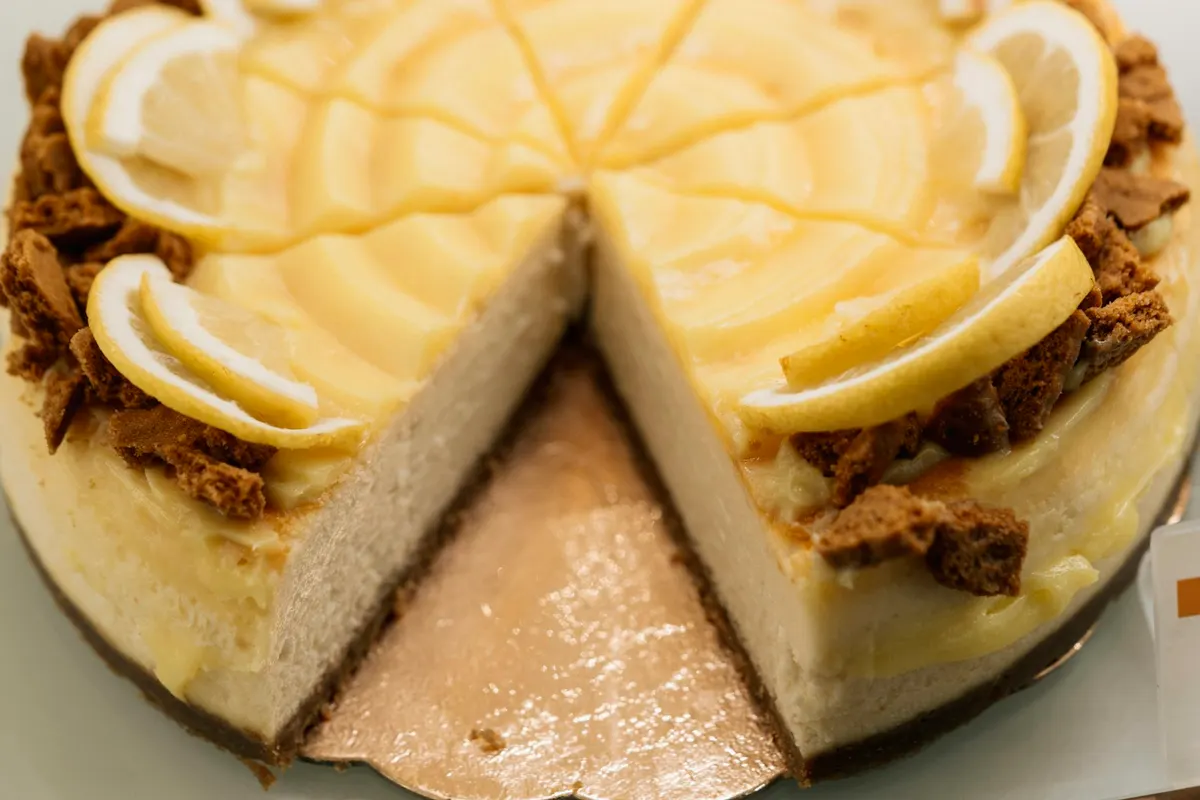
Adjust this recipe
Ingredients
- 120 g graham cracker crumbs, about 1 1/2 cups for the whole cake, digestive biscuits in the UK
- 54 g unsalted butter, melted Out of butter?
- 680 g full-fat cottage cheese, 4 percent milkfat, a 24 oz tub for the whole cake
- 225 g cream cheese, full-fat, one 8 oz block for the whole cake, at room temperature Out of cream cheese?
- 150 g granulated sugar, caster sugar in the UK
- 4 tbsp cornstarch, cornflour in the UK Out of cornstarch?
- 1 tbsp lemon zest, finely grated, from about 1 lemon
- 2 tbsp lemon juice
- 2 tsp vanilla extract Out of vanilla extract?
- 4 large eggs, at room temperature
Method
- Heat the oven to 160C (140C fan, 325F), with a rack in the middle and a roasting tin on the shelf below it. Line the base and sides of a 23 cm (9 inch) springform tin with baking paper.
- Stir the graham cracker crumbs into the melted butter until they look like wet sand, press them firmly into the base of the tin with the bottom of a glass, and bake for 10 minutes. Leave it to cool while you make the filling.
- Blend the cottage cheese in a food processor or blender for a full 2 minutes, scraping down the sides once or twice, until it is glossy and completely smooth with no curds left. This is the step that decides the texture, so do not cut it short.
- Add the cream cheese, sugar, cornstarch, lemon zest, lemon juice and vanilla and blend until smooth. Add the eggs last and pulse only until they disappear: every extra second beats in air, and air is what cracks a cheesecake.
- Pour the filling over the base and tap the tin firmly on the counter to bring up any bubbles. Set it on the middle shelf, then carefully pour boiling water from the kettle into the roasting tin below to fill the oven with steam.
- Bake for 55 to 65 minutes, until the edge is set and slightly puffed but the middle still wobbles like jelly in a circle about 8 cm (3 inches) across. Turn the oven off, prop the door open a little and leave the cheesecake inside for an hour.
- Run a thin knife around the edge, leave it to cool completely, then chill it for at least 6 hours, or overnight, before you release the tin. Slice with a long knife dipped in hot water and wiped between cuts.
Cottage cheese makes a proper baked cheesecake on two conditions. Blend it for a full two minutes, until not one curd is left, and keep a quarter of the cheese as cream cheese, which is where the flavour people recognise lives. A slice comes to about 282 calories and 10 g of protein by our estimate.
Does cottage cheese make good cheesecake?
Baked, yes. It sets on the eggs like any baked cheesecake, and the result is lighter than a New York slice, closer to a German Käsekuchen or a Polish sernik, which were built on fresh curd cheese in the first place.
It has two weaknesses, and both are handled in the method. Cottage cheese is lumpy, so a blender has to do what a block of cream cheese does on its own. And it carries more water, which is why this recipe uses 4 tbsp of cornstarch where a cream cheese recipe often uses one. The cornstarch page covers what else can do that job if you have none.
No-bake is a different question, and the answer is further down.
How to make cottage cheese taste like cheesecake
Four things, in order of how much they matter.
Blend it for longer than seems reasonable. Two full minutes in a food processor or blender, scraping down the sides, until the cheese is glossy rather than grainy. Texture is what gives cottage cheese away, far more than flavour, and a cake made with slightly grainy cheese stays slightly grainy.
Keep a quarter of it cream cheese. One 8 oz block against a 24 oz tub of cottage cheese is enough for the flavour to read as cheesecake. It is also over 40 percent of the fat in a slice, which is exactly why ReciPop’s swap goes after it.
Add lemon. The zest and juice give back the tang that cream cheese has and cottage cheese mostly does not. Vanilla rounds it off.
Leave out the salt. Both cheeses arrive salted, about 315 mg of sodium per 100 g each by USDA’s figures, so the filling needs none.
The 3 and 4 ingredient cottage cheese cheesecake
The version going round online is cottage cheese, eggs, a sweetener such as maple syrup or honey, and vanilla, blended and baked in ramekins with no base. Three-ingredient versions drop the vanilla, or use vanilla protein powder in place of the sweetener.
It is good, and it has more protein than this one. By our estimate a ramekin of half a cup of cottage cheese, one egg, a tablespoon of maple syrup and half a teaspoon of vanilla comes to about 240 calories and 19 g of protein. It is also a baked custard rather than a cheesecake: soft, a little eggy, with nothing to slice. If protein is the point, make that. If the point is a cheesecake on a plate, make this.
Can you make a no-bake cottage cheese cheesecake?
Not the same way. A no-bake cheesecake has no eggs to set it, so it sets on fat going firm in the fridge, and cottage cheese has almost none: 4.3 g per 100 g against 34 g in cream cheese. Blend it with sugar and chill it and you get a thick sweet cream that never slices.
The no-bake versions that do slice lean on something else to set them: gelatine, bloomed and melted at the rate on the packet, or a box of instant pudding mix. Both work, and the texture is closer to a set mousse than to cheesecake. Gelatine also stops it being vegetarian. Why fat carries a no-bake cheesecake at all is set out under baked and no-bake on the cream cheese page.
Pumpkin cottage cheese cheesecake
The same cake takes pumpkin well. Blend 1 cup (245 g) of canned pumpkin purée and 2 tsp of pumpkin pie spice into the filling with the cream cheese, add one more tablespoon of cornstarch for the extra water, and leave out the lemon zest. Give it 5 to 10 minutes longer in the oven, judged by the same wobble.
Buy the can marked 100 percent pumpkin, not pumpkin pie filling, which is already sweetened and spiced. By USDA values the purée and the extra cornstarch add about 10 calories and 2 g of carbs a slice. For the rest of a Thanksgiving table, the sweet potato casserole and the green bean casserole are built the same way.
Where the calories are
Per slice, a twelfth of the cake, about 125 g before it is baked.
| Part of the slice | kcal | Protein | Carbs | Fat |
|---|---|---|---|---|
| Crust: graham crackers and butter | 75 | 1 g | 8 g | 5 g |
| Cream cheese, 19 g | 66 | 1 g | 1 g | 6 g |
| Cottage cheese, 57 g | 56 | 6 g | 2 g | 2 g |
| Sugar, 12.5 g | 48 | 0 g | 12 g | 0 g |
| Egg, a third of one | 24 | 2 g | 0 g | 2 g |
| Cornstarch, lemon and vanilla | 13 | 0 g | 3 g | 0 g |
| Per slice | 282 | 10 g | 26 g | 15 g |
The crust is the biggest single line, 27 percent of the calories. Bake the filling on its own in the lined tin and a slice drops to about 206 calories and 18 g of carbs.
USDA puts commercially prepared cheesecake at 401 calories, 7 g of protein and 28 g of fat for its standard 125 g slice, the same size as a slice of this one before baking. So this is about 30 percent lighter, with around half the fat and half as much protein again. Most of that is the cheese: cream cheese is 350 calories per 100 g, and cottage cheese is 98.
The swap, and what it is worth
| Swap | kcal | Protein | Carbs | Fat | Running total |
|---|---|---|---|---|---|
| Cream cheese to blended cottage cheese | −47 | +1 g | 0 g | −6 g | 235 kcal, 11 g protein |
With the swap on, the cake is all cottage cheese, at 9 g of fat a slice instead of 15. It tastes milder and less like a New York cheesecake, and the lemon does more of the work. Blend the extra cottage cheese with the rest; nothing else in the method changes.
The swap this page leaves off
Pick fewer carbs in the app and ReciPop will also turn the sugar here into honey, at two thirds of the amount. That saves about 6 g of carbs a slice, and it is left off this page on purpose. The National Honey Board’s own baking advice is to use honey for no more than half the sugar in a bake and to lower the oven by 25F, about 14C, because honey browns faster. A swap that changes the oven as well as the ingredient does not belong on a one-tap switch, and on a cheesecake, where a pale, even top is the point, browning is the thing you least want.
What goes wrong
A grainy cake. Either the cottage cheese was not blended for long enough, or the cake overbaked. Blend for the full two minutes, and take it out while the middle still wobbles, because it keeps setting as it cools.
A cracked top. Air and heat. Pulse the eggs in only until they disappear, bake with the tin of steam below, and let it cool in the switched-off oven rather than on the counter. A cracked cheesecake tastes exactly the same.
A wet, weeping middle. Underbaked, or sliced too soon. It needs the hour in the oven with the door ajar and at least 6 hours in the fridge. The cornstarch is there for the water cottage cheese brings, so do not leave it out.
In the UK: digestives, caster sugar and soft cheese
Use digestive biscuits for the base. They are richer than graham crackers, 21.3 g of fat per 100 g on McVitie’s label against 10.6 g for graham crackers by USDA’s figure, so a digestive base adds about 5 calories and 1 g of fat a slice. Caster sugar is what a British baker would use, and it dissolves a little faster. Cornflour is cornstarch.
Cottage cheese comes in 300 g tubs, so this takes just over two. For the cream cheese, any full-fat soft cheese works. British soft cheese is softer than an American block, for the reasons on the cream cheese page, but at a quarter of the cheese here it changes little.
Digestive figures from Open Food Facts, checked on 25 September 2026. Contains information from Open Food Facts, available under the Open Database License.
Storing it
Keep it covered in the fridge and eat it within 3 to 4 days, the USDA window for leftovers. It slices most cleanly cold.
Every figure here is an estimate from USDA values rather than a measurement. Why recipe macros are estimates explains how far they move with the brands you buy.
Where next
Worth cooking next:
- Healthy sweet potato casserole, and where the sugar really isSweet potatoes bring about 6 g of sugar a serving on their own. This casserole adds 3 tbsp of brown sugar to the whole dish, for about 289 calories a serving.
- Cottage cheese lasagna, with the ricotta question answeredCottage cheese replaces ricotta in lasagna 1:1, with more protein and under half the fat. A slice here is about 521 calories and 36 g of protein by our estimate.
- Protein overnight oats that do not set like concreteOvernight oats at 39 g protein without the cement texture. The ratio that keeps them spoonable, and why protein powder is the thing that ruins them.
Cooking it as part of a week? ReciPop plans seven days of meals around the time you have, the appliances you own and how many you are feeding, then turns them into one grocery list sorted by aisle. How the weekly plan works