High protein pasta recipes, ranked by what is actually on the plate
Seven high protein pasta dinners from 29 to 54 g a plate, what to add to any pasta to raise it, and when the protein box is worth buying. Macros estimated.
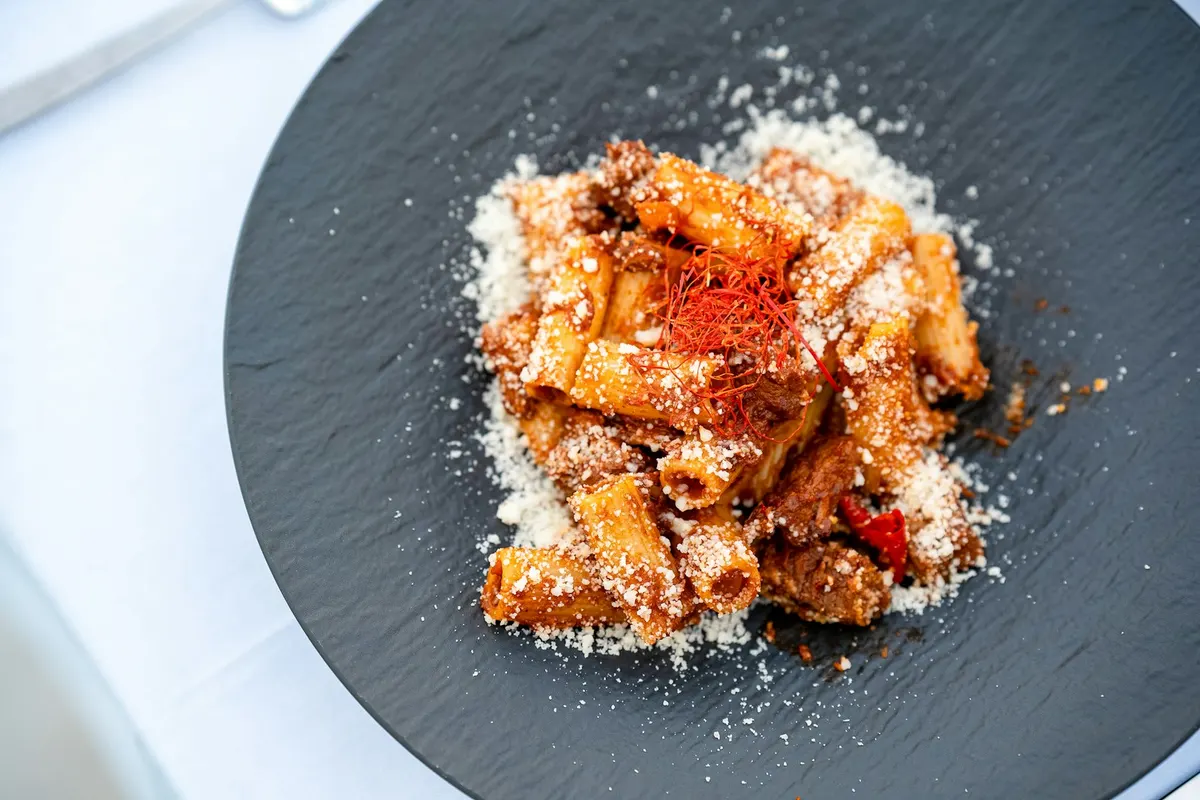
A high protein pasta dinner gets most of its protein from what goes on the pasta, not from the pasta. Chicken, tuna or lean beef each add 21 to 34 g a serving by our estimate. Switching from wheat to lentil pasta adds 12 g at most. The seven plates below run from 29 to 54 g, and the biggest numbers all come from the pan.
That is worth knowing before you spend twice as much on the box.
Seven plates, compared
Estimates per serving, calculated from typical ingredient values rather than measured, with 100 g of dried pasta a head unless the dish says otherwise.
| Plate | Protein | kcal | Carbs | Fat | Good for |
|---|---|---|---|---|---|
| Chicken and tomato pasta | 54 g | 690 | 83 g | 15 g | The most protein, full recipe |
| Lean beef ragu | 46 g | 675 | 87 g | 15 g | Batch cooking, freezes |
| Tuna and tomato pasta | 35 g | 547 | 79 g | 11 g | The quickest, mostly from the cupboard |
| Edamame and feta pasta salad | 34 g | 575 | 76 g | 15 g | Vegetarian, packed lunches |
| Lentil bolognese | 31 g | 685 | 113 g | 11 g | Vegetarian, cheapest |
| Alfredo without cream | 30 g | 775 | 72 g | 41 g | When the point is the sauce |
| Cottage cheese pasta sauce | 29 g | 560 | 79 g | 13 g | Creamy, and the lightest here |
The most protein per calorie is the chicken pasta, at about 7.8 g for every 100 kcal, with the beef ragu next at 6.8 g and the tuna at 6.4 g. The least is the alfredo at 3.9 g, because it is a butter and parmesan sauce and does not pretend otherwise.
The lentil bolognese is the honest outlier. It is the cheapest plate here and the most carbohydrate, at 113 g, because the lentils bring carbs as well as protein. Made with red lentil pasta instead of wheat, it rises to an estimated 43 g of protein and 98 g of carbs, which is the one case on this page where changing the box earns its price: a vegetarian plate has no chicken to lean on.
What your pasta comes to, before the sauce
Protein per serving for 100 g of dried pasta and one addition. A plain tomato sauce adds about 2 g on top.
About 46 g of protein a serving, 12 g from the pasta and 34 g from the addition.
| Added to 100 g of | Regular wheat pasta12 g alone | Higher-protein wheat blend20 g alone | Chickpea pasta20 g alone | Red lentil pasta24 g alone |
|---|---|---|---|---|
| Nothing | 12 g | 20 g | 20 g | 24 g |
| Lentils40 g dried lentils, cooked into the sauce, 10 g | 22 g | 30 g | 30 g | 34 g |
| Parmesan30 g parmesan, 11 g | 23 g | 31 g | 31 g | 35 g |
| Cottage cheese100 g cottage cheese, blended, 11 g | 23 g | 31 g | 31 g | 35 g |
| Edamame100 g shelled edamame, 12 g | 24 g | 32 g | 32 g | 36 g |
| Beef mince125 g 5% fat beef mince, 27 g | 39 g | 47 g | 47 g | 51 g |
| Tuna110 g drained tinned tuna, 21 g | 33 g | 41 g | 41 g | 45 g |
| Chicken breast150 g raw chicken breast, 34 g | 46 g | 54 g | 54 g | 58 g |
Estimates from typical ingredient values rather than measurements. Brands of pasta vary more than these four categories do, so read the box you own.
The four without a recipe page, in brief
Three of these plates have full recipes on this site. The other four are simple enough that the quantities and the one thing that goes wrong will get you there.
Lean beef ragu
Per serving: 125 g of 5% fat beef mince, 80 g of finely chopped onion and carrot, 150 g of passata and a teaspoon of olive oil, with 10 g of parmesan to finish. Brown the mince hard in a wide pan before anything else goes in, then soften the vegetables in the fat it leaves, add the passata and simmer for at least 20 minutes.
Brown it properly. Lean mince releases water before it browns, and if the pan is crowded it boils grey in that water and never develops flavour. Cook it in two batches if you are making four servings. The sauce keeps 3 to 4 days in the fridge and 2 to 3 months in the freezer, the FoodSafety.gov figures for soups and stews with meat, and the freezer time is about quality rather than safety.
Tuna and tomato pasta
Per serving: 110 g of drained tinned tuna, 150 g of halved cherry tomatoes, two teaspoons of olive oil, a tablespoon of capers and the zest and juice of a quarter of a lemon. Soften the tomatoes in the oil while the pasta cooks, then take the pan off the heat and fold in the tuna, capers and lemon with a splash of pasta water.
Keep the tuna off the heat. Tinned tuna is already cooked, and simmering it turns it dry and stringy. Warmed through in the residual heat, it stays in flakes.
Edamame and feta pasta salad
Per serving: 80 g of dried short pasta, 100 g of shelled edamame, 40 g of crumbled feta, 80 g each of cucumber and cherry tomatoes, and a dressing of 50 g of 0% Greek yogurt loosened with lemon juice. Cook the edamame in the pasta water for the last three minutes, drain, and rinse both under cold water.
Rinse the pasta for a salad, and only for a salad. Hot pasta keeps absorbing dressing until it is dry and claggy by lunchtime. It keeps 3 to 4 days in the fridge, the FoodSafety.gov figure for macaroni salads, and like them it does not freeze well.
Lentil bolognese
Per serving: 40 g of dried green or brown lentils, 80 g of chopped onion and carrot, 150 g of passata, a teaspoon of olive oil and 15 g of parmesan. Soften the vegetables, add the lentils, passata and about 200 ml of water, and simmer for 25 to 30 minutes until the lentils are tender.
Use green or brown lentils, not red. Red lentils collapse into a purée, which makes a good dal and a poor bolognese. And add water as it reduces: lentils keep absorbing it, and a sauce that looks right at 20 minutes is paste at 30.
Easy, meal prep, vegetarian and the rest
Easiest: the tuna pasta, which is on the table in the time the pasta takes to cook, and whose one essential ingredient keeps in a cupboard for months.
For meal prep: the beef ragu freezes, and the pasta salad is built to be eaten cold on the third day. Cook the pasta fresh for the ragu when you reheat it, since pasta frozen in sauce goes soft.
Vegetarian: the edamame salad, the lentil bolognese, the cottage cheese sauce and the alfredo, if your parmesan is made without animal rennet. Traditional Parmigiano Reggiano is not, so check the label.
With cottage cheese: the cottage cheese pasta sauce blends it into a creamy base, and blending is the part that matters. Stirred in without blending, the curds stay visible.
Low carb: none of these, honestly. Pasta is the carbohydrate in the dish. Chickpea pasta takes 12 to 14 g of carbs off a serving, which is a trim rather than a change of category. If low carb is the goal, the low carb pad thai shows how far a noodle dish can actually go.
With ground beef: the ragu above, with the one warning about browning it in batches.
Is the protein pasta worth buying?
It depends how often you eat pasta. Swapping wheat for chickpea is worth about 6 to 7 g of protein a serving, and the matrix above shows what that is next to any addition. For pasta once a week, the ordinary box and more on top is the simpler answer. For three times a week, with a number to hit, the swap earns its price.
The chicken pasta recipe sets out what each kind of pasta brings per 100 g, how they cook differently, and applies the chickpea swap to its own macros so you can see the difference on a real plate.
Chickpea pasta for regular is also one of the swaps ReciPop’s Pop feature makes when you ask a recipe for more protein, so you can see what it is worth on the dish you are cooking tonight rather than on ours.

Pop, in ReciPop
Make swaps like this on any recipe, in one tap
- Open any recipe, one you saved from a link or one of the 34,000+ in the app.
- Tap Pop and pick more protein, fewer carbs or less fat.
- See each swap's macros per serving, keep the ones worth it. Your original stays untouched.

Does any of this change the macros?
Yes, and mostly through the addition rather than the pasta. Every figure on this page is an estimate, calculated from typical ingredient values and rounded, and the protein in a tin of tuna or a pack of mince varies by brand. The reasons are set out in why recipe macros are estimates.
Corrected on 26 September 2026. This page valued drained tinned tuna at 25.5 g of protein per 100 g, USDA’s entry for the no-salt kind. USDA’s main entry gives 19.4 g and US labels agree, so the tuna pasta is about 35 g of protein a plate, not 42. The table, the protein matrix, the protein per calorie ranking and the answers above all use the lower figure.
If the question is a creamy sauce without cream rather than protein, pasta sauce without heavy cream compares eight ways to make one on the same basis.
Dishes to make next
- Cottage cheese lasagna, with the ricotta question answeredA pasta bake whose protein comes from the cheese layer, which is why chickpea noodles add only 3 g a slice here.
- Healthy lasagna soup, with the cheese on top where you can see itLasagna flavour at 30 g of protein a bowl, with the chickpea pasta swap worked out on 30 g of pasta.
- High protein mac and cheese that is still just mac and cheeseThe same sum in a cheese sauce: what the chickpea pasta adds, against what a portion of chicken adds.
- Turkey bolognese, and what the turkey actually saves youWhat chickpea spaghetti is worth on a plate of ragù, next to what the mince itself is worth.
Common questions
Meat or fish does the most. By our estimates, 150 g of raw chicken breast adds about 34 g of protein a serving, 125 g of 5% fat beef mince about 27 g and 110 g of drained tinned tuna about 21 g. The vegetarian additions are smaller: 100 g of shelled edamame about 12 g, 100 g of blended cottage cheese or 30 g of parmesan about 11 g each, and 40 g of dried lentils cooked into the sauce about 10 g. All figures are estimates from typical ingredient values.
Of the common kinds, red lentil pasta, at about 24 g of protein per 100 g dried. Chickpea pasta and higher-protein wheat blends come in around 20 g, and regular wheat pasta around 12 g. That is a real difference, but it is at most about 12 g a serving, which is less than half of what a portion of chicken or tuna adds. Brands vary more than these categories, so check the box you buy.
It is ordinary pasta with more protein and usually more fibre, not a health food in its own right. Whether the plate is a good one depends far more on what goes on it than on which box it came from. Lentil and chickpea pastas also cook differently: they turn from firm to soft quickly and have a flavour that suits tomato better than delicate sauces.
One widely shared version, published by Kirbie's Cravings in January 2026, is a homemade dough of blended extra firm tofu kneaded with 00 flour, rolled out and cut into noodles. Split into four portions, the published quantities come to about 29 g of protein a portion by our estimate, against about 12 g for 100 g of dried wheat pasta. In effect it is a portion of pasta with 100 g of tofu worked into the dough, and it adds what 100 g of tofu adds.