Alfredo sauce without heavy cream, which is to say alfredo sauce
Real alfredo is butter, parmesan and pasta water, and never had cream in it. Three ingredients, one technique, and the two mistakes that split the sauce.
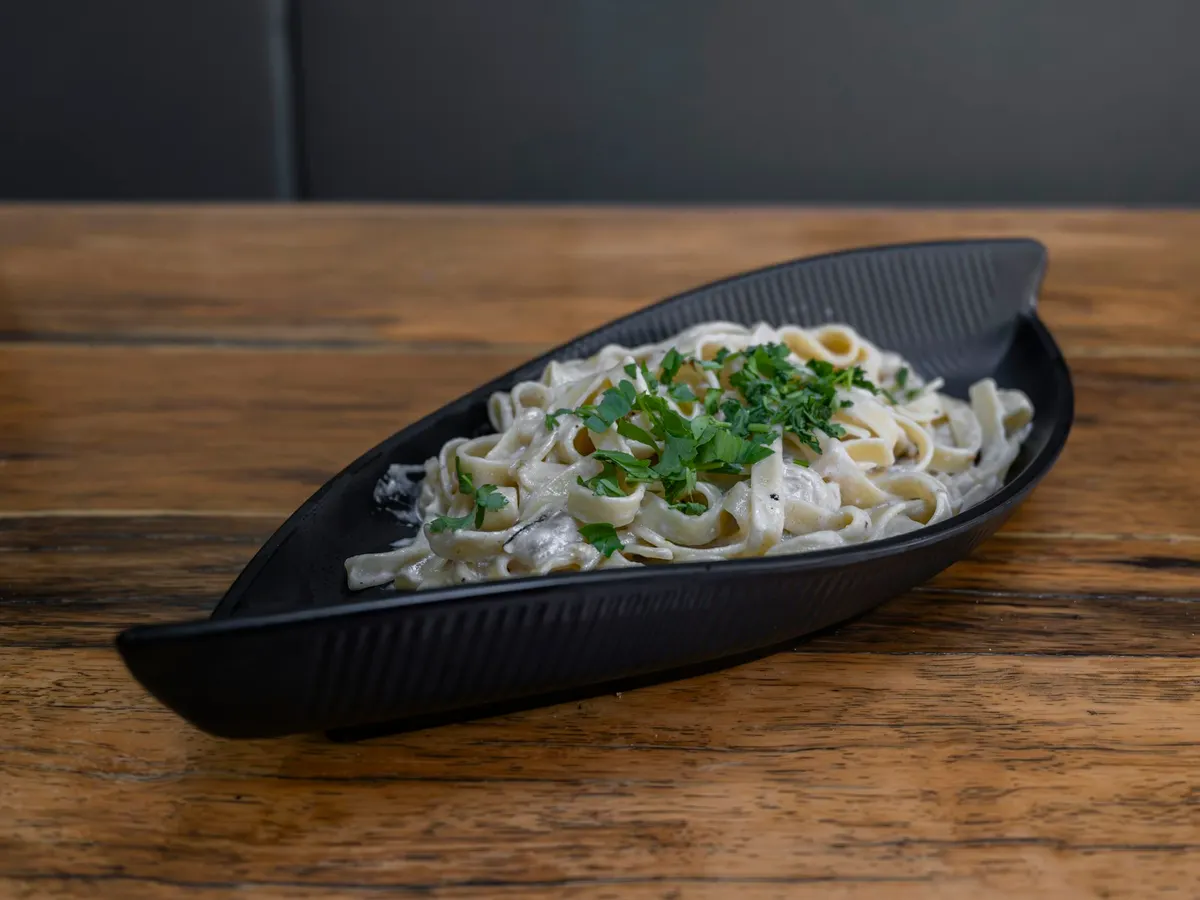
Adjust this recipe
Ingredients
- 200 g dried fettuccine, or tagliatelle
- 60 g unsalted butter, cold, cut into cubes
- 100 g parmesan, grated from a block, as finely as you can
- 0.5 tsp black pepper, coarsely ground
Method
- Boil the pasta in less water than you normally would, in a pan just big enough to hold it, and salt it lightly. Less water means more starch stays in it, and that starch is the ingredient this sauce is actually built on.
- Grate the parmesan finely from a block while the pasta cooks. Do not use the pre-grated kind, for the reason in the notes below.
- Drain the pasta one minute before the packet says, and keep at least a mugful of the water.
- Take the pan off the heat entirely. Add the butter and about four tablespoons of the pasta water and swirl until the butter has melted into a cloudy, slightly thickened liquid rather than a pool of fat floating on top.
- Add the drained pasta and toss it through the butter for about 30 seconds so every strand is coated and the pasta cools the pan slightly.
- Still off the heat, add the parmesan in three handfuls, tossing hard after each one. It will look clumpy for a few seconds and then come together into a sauce that clings. If it stays grainy, add another splash of pasta water and keep moving.
- Add the pepper, taste for salt, and serve it immediately in warmed bowls. This sauce is at its best for about two minutes and does not wait.
If you are looking for alfredo sauce without heavy cream, you are not looking for a substitution. You are looking for alfredo.
The original has three ingredients: butter, parmesan and the starchy water the pasta cooked in. No cream, no flour, no milk, no garlic. The cream arrived later and somewhere else, and it is now so standard that removing it feels like a compromise when it is the opposite.
What can you use instead of heavy cream in alfredo sauce
Nothing, and that is the good news.
The cream in a modern alfredo is doing a job that starch and butter already do better. Cream thickens by being fat and by reducing. Pasta water thickens by being full of dissolved starch, which grabs the melted butter and the fat in the parmesan and holds them in suspension. That suspension is the sauce.
Once you have seen it happen in the pan it is hard to go back, because the cream version is heavier and tastes less of cheese.
The roux version, and why it is not this
Most of the recipes ranking for this search will hand you butter, flour and milk. That makes a perfectly nice sauce. It is a béchamel with parmesan stirred into it, and it is worth knowing that is what you are making.
A béchamel is thickened by flour, so it is stable, forgiving and slightly pasty. An emulsion is thickened by starch and agitation, so it is fragile, fast and much cleaner tasting. Neither is wrong. They are different sauces with the same name, and if you have been making the flour one and wondering why it never tasted like a restaurant, that is why.
If you want the flour version anyway, you do not need a recipe for it: it is two tablespoons of flour cooked in the butter for a minute, then milk added slowly, then cheese off the heat.
The two things that split it
Heat. Parmesan added to a pan that is still on the flame does not melt into the sauce, it seizes. The proteins tighten, the fat runs out, and you get stringy lumps sitting in an oily puddle. Take the pan off the heat before the butter goes in and leave it off until the dish is served. There is more than enough residual heat in the pasta.
Pre-grated parmesan. The bags are coated with cellulose or potato starch to stop the shreds sticking together, and that coating does exactly the same thing in your pan. It will not melt smoothly. Grate it from a block, and grate it finely, because a fine grate dissolves before it has time to clump.
There is a third, smaller one: too much pasta water in the pan to begin with. Boil the pasta in a small pan so the water ends up properly starchy. Water that looks barely cloudy will not emulsify anything.
Can I use milk instead of cream
You can, and it will be thinner and it will want flour to hold together, which puts you back at the béchamel.
If you have no parmesan either, this is not a dish that survives that. Pecorino works and is sharper and saltier, so use a little less. Grana Padano works and is milder. Anything that is not a hard aged Italian cheese will not emulsify the same way, and the sauce is 50 g of cheese a serving, so the cheese is not a detail here.
Taking the cream out did not make it light
This is the part the rest of the first page leaves out.
A serving here is about 775 calories and 41 g of fat, which is nearly half the calories. The butter and the parmesan account for about 422 of those calories and 39 g of that fat between them. The cream was never the problem. It was sitting on top of a sauce that was already made of butter and cheese.
Those are estimates from typical ingredient values rather than measurements, and they move with how heavily you grate. The direction does not move at all.
So there is no swap on this page that makes alfredo light, and it would be dishonest to offer one. The chickpea pasta toggle adds 7 g of protein and takes 12 g of carbohydrate off, which is worth having and is not the point.
If what you actually want is a creamy pasta that is genuinely lighter, it is a different sauce and it has its own page. Cottage cheese pasta sauce blends to a creamy base at 29 g of protein and 13 g of fat a serving, which is a third of the fat here. It is not alfredo and it does not pretend to be. Heavy cream substitutes covers every other option and what each one costs.
Scaling it, which is where it goes wrong
This is written for two on purpose.
The emulsion gets harder as the pan gets fuller, because tossing is what makes it, and you cannot toss eight servings of fettuccine hard enough in a domestic pan. If you are cooking for four or more, cook the pasta in one pot and make the sauce in two pans. It takes an extra 90 seconds and it is the difference between a sauce and a greasy plate.
What to serve with it
Nothing rich. This is already the richest thing on the table.
A sharp green salad and bread is the honest answer. If you want protein on it rather than beside it, grilled chicken breast added at the end works, and the high protein pasta is built that way from the start if you would rather have the whole plate designed around it.
What the swap does
| Version | Calories | Protein | Carbs | Fat |
|---|---|---|---|---|
| As written | 775 | 30 g | 72 g | 41 g |
| Chickpea pasta instead | 755 | 37 g | 60 g | 42 g |
Estimates per serving at two servings. The same swap carries the same figures on the two other pasta recipes here, because it is the same 100 g of dried pasta doing the same job.