Turkey bolognese, and what the turkey actually saves you
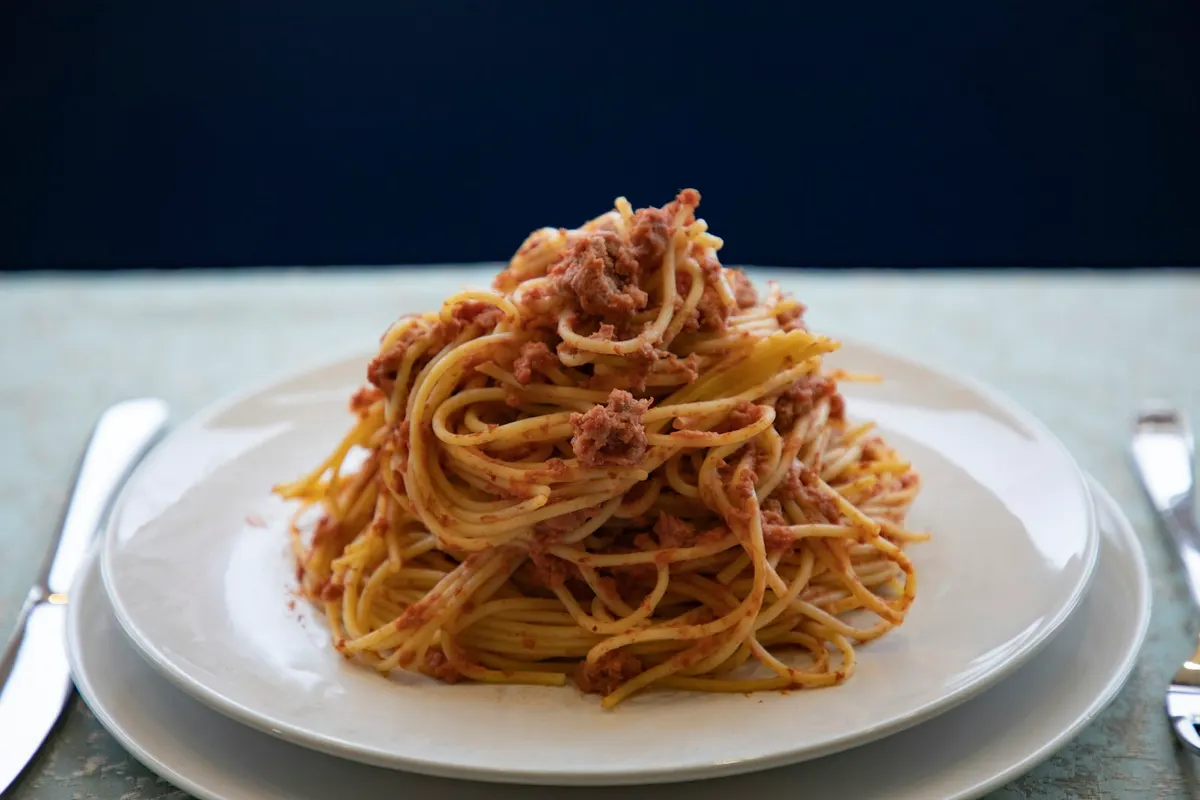
Turkey mince is a fat swap, not a protein one. A plate here is about 723 calories and 41 g of protein by our estimate, against 835 with standard beef mince.
Adjust this recipe
Ingredients
- 4 tsp olive oil
- 120 g onion, finely chopped
- 120 g carrot, finely chopped
- 120 g celery, finely chopped
- 500 g turkey mince, 7 percent fat, not the extra lean
- 160 ml dry white wine
- 20 g tomato purée, double concentrate, tomato paste in the US
- 400 g passata, or canned tomato sauce in the US
- 400 ml chicken stock, or water Out of chicken broth or stock?
- 160 ml whole milk
- 340 g spaghetti, dried
- 40 g parmesan, grated, to serve
Method
- Heat the oil in a heavy pan over a medium-low heat and cook the onion, carrot and celery for about 10 minutes, stirring, until they are soft and sweet but have taken no colour. Chop them with a knife rather than a processor, which turns them to juice.
- Turn the heat up and add the turkey in two batches, breaking each one up and letting it sizzle and brown before the next goes in. A crowded pan steams the mince grey, and grey mince is why lean bolognese so often tastes of nothing.
- Pour in the wine and let it bubble until you cannot smell it any more and the pan is nearly dry.
- Stir in the tomato purée and cook it for a minute, then add the passata and the stock. Bring it to a bare simmer, cover, and leave it for 35 minutes, stirring now and then.
- Add the milk, then simmer uncovered for about 10 minutes, until it has gone and the sauce holds the trail of a spoon. Season with salt and pepper at this point rather than at the start, because the sauce has reduced by now and salting early overshoots.
- Cook the spaghetti one minute short of the packet time, keeping a mugful of the water before you drain it. Chickpea spaghetti needs tasting two minutes early, and a rinse after draining.
- Tip the drained pasta into the sauce and toss it over a low heat for a minute, loosening with the pasta water a splash at a time until the sauce clings to the strands instead of sitting on top of them. Serve with the parmesan.
Turkey mince is a fat swap, not a protein one. Per 100 g raw, 93 percent lean turkey and standard 80/20 beef mince carry about the same protein, 17.3 g against 17.5 g by USDA figures, and the fat is where they part: about 9.6 g against 19.4 g. A plate of this comes to about 723 calories and 41 g of protein by our estimate. The same plate made with beef mince comes to about 835.
Is turkey bolognese healthier than beef?
Lighter, yes. Higher in protein, no, whatever the packet suggests.
| Per 100 g, raw | Protein | Fat |
|---|---|---|
| Turkey mince, 93 percent lean | 17.3 g | 9.6 g |
| Beef mince, 90 percent lean | 18.2 g | 12.8 g |
| Beef mince, 80 percent lean | 17.5 g | 19.4 g |
Figures from USDA FoodData Central, which puts the turkey at about 153 calories per 100 g and the 80/20 beef at about 243. Lean 90/10 beef sits much closer to turkey than to the standard mince, so if you like beef in a bolognese, buying it leaner is a smaller compromise than changing the meat.
What you give up with turkey is the fat that carries flavour through a long simmer, which is why the browning step below matters more here than it would with beef.
Turkey bolognese calories
Per serving, which is a quarter of the pan, estimated from typical ingredient values rather than measured.
| What you are eating | kcal | Protein | Carbs | Fat |
|---|---|---|---|---|
| The sauce on its own | 365 | 26 g | 20 g | 18 g |
| With 85 g spaghetti and parmesan | 723 | 41 g | 84 g | 23 g |
| With chickpea spaghetti instead | 696 | 47 g | 72 g | 26 g |
| Made with 80/20 beef mince | 835 | 41 g | 84 g | 35 g |
The wine is counted in full, which slightly overstates it, since most of the alcohol leaves the pan before you eat.
What makes a bolognese a bolognese?
There is an official answer, and this recipe does not meet it. The Accademia Italiana della Cucina deposited an updated recipe for ragù alla bolognese with the Bologna chamber of commerce on 20 April 2023, replacing the one it deposited in 1982. For six people it asks for 400 g of coarsely ground beef, 150 g of fresh pork pancetta, 60 g each of onion, carrot and celery, a glass of wine, 200 g of passata, a tablespoon of tomato paste, an optional glass of whole milk, stock, olive oil, salt and pepper, simmered covered for two to three hours. Garlic, herbs, other spices, brandy in place of the wine and flour to thicken are all listed as not allowed. Veal is out. So, obviously, is turkey.
What this recipe keeps is the shape of it: the finely chopped soffritto softened slowly, the wine cooked off completely, tomato in small quantities rather than as the body of the sauce, and the milk near the end. What it changes is the meat and the time. Call it a turkey ragù and nobody in Bologna has to know.
Why turkey does not want three hours
A beef ragù simmers for hours because the collagen in the cuts it is made from needs that long to turn to gelatine, which is what makes the sauce glossy. Turkey mince has very little of it and almost no fat to give up, so a long simmer takes it past tender and into dry and grainy without the payoff. Forty-five minutes is enough, and most of the flavour comes from what happens in the first ten.
What goes wrong
Grey mince. Lean turkey releases a lot of water, and a pan with all of it in at once boils rather than browns. Two batches, a hot pan, and leave each one alone for a minute before you stir it.
Wine that never cooked off. Undercooked wine tastes sharp and stays that way through the simmer. Wait until the smell of it has gone from the pan.
A watery sauce. If it is still loose after the milk, take the lid off and let it go another few minutes. A bolognese should coat the pasta, not pool under it.
Chickpea spaghetti gone soft. It has almost no grace period between firm and mushy, so taste it two minutes before the packet says and rinse it after draining. The high protein pasta guide compares what the different boxes are actually worth.
Spaghetti or tagliatelle
In Bologna this sauce goes on tagliatelle, and the same chamber of commerce holds a deposited golden measure for the authentic tagliatella, lodged in 1972. Flat egg pasta holds a meat sauce better than round strands do, which is the whole argument.
Spaghetti is what most people have in the cupboard, so that is what the recipe says, and it is the line the app swaps for chickpea pasta. If you have tagliatelle, use it.
Storing and freezing
The sauce keeps 3 to 4 days in the fridge and 3 to 4 months in the freezer, the USDA guidance for leftovers. It is better on the second day, once the sauce has settled. Freeze the sauce on its own and cook the pasta fresh, because reheated pasta never comes back to the texture the sauce deserves.
Every figure here is an estimate from typical ingredient values rather than a measurement. Why recipe macros are estimates explains how far they move with what you buy.
Where next
This recipe is one of the dishes in High protein meal prep: one Sunday, five days, about 100 g of protein a day.
Worth cooking next:
- Ground turkey chili that does not taste like it is missing somethingTurkey chili at 25 g protein a bowl, without the dryness turkey usually brings. Why you brown it in two batches and what replaces the fat you lost.
- Turkey meatballs that stay soft, because of the milkSoaking the breadcrumbs in milk is what stops lean turkey meatballs going dry and bouncy. Plus the browning step that oven-only versions skip.
- High protein chicken pasta, where the protein is the chicken and not the boxChicken and tomato pasta at 54 g protein a plate. Most high protein pasta recipes lean on the box, and this compares what each kind of pasta is actually worth.
Cooking it as part of a week? ReciPop plans seven days of meals around the time you have, the appliances you own and how many you are feeding, then turns them into one grocery list sorted by aisle. How the weekly plan works