How to hit your protein goal without tracking every meal
Set one number, split it across your meals, and build each meal around a portion that carries its share. A 100 g day and a 150 g day, worked out from real recipes.
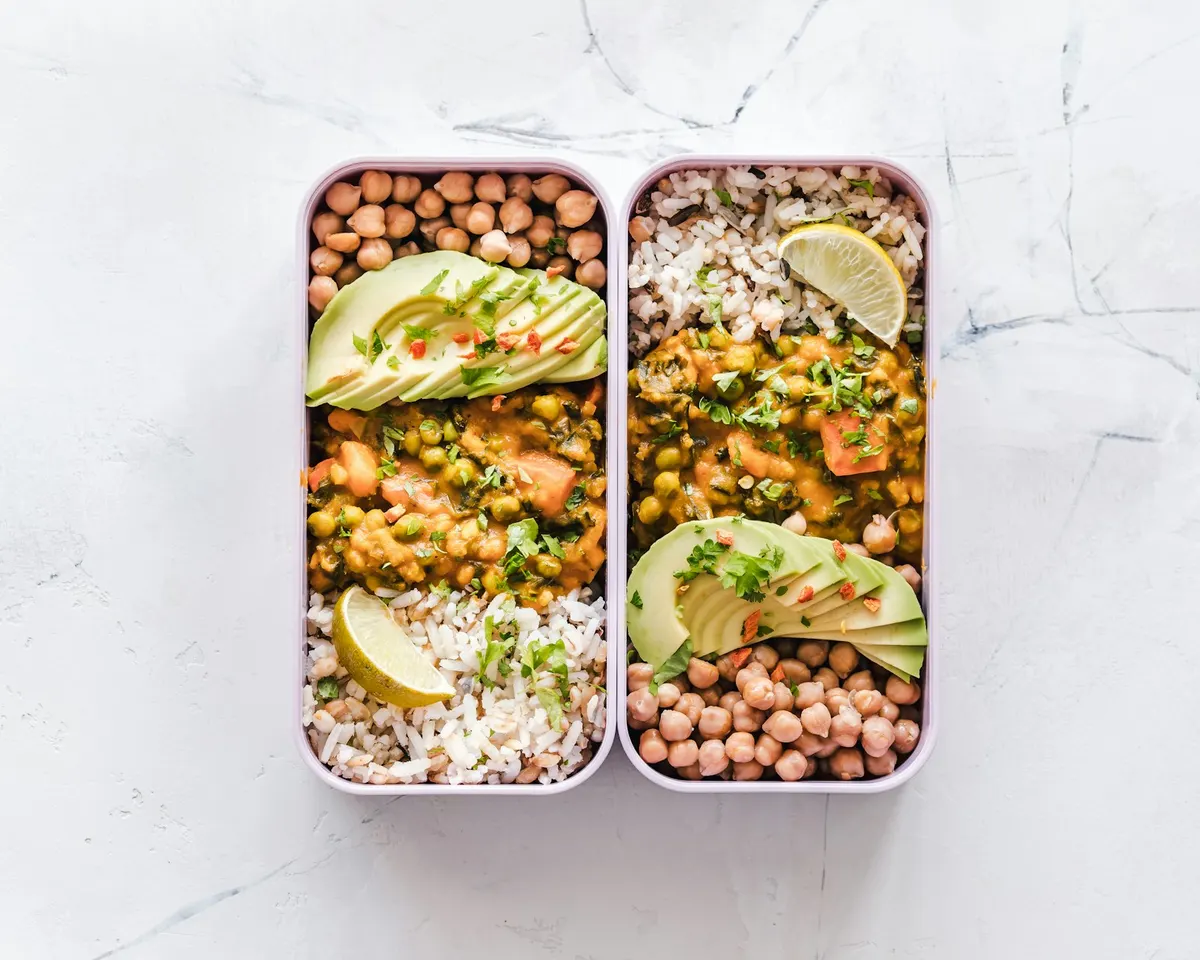
The easiest way to hit a protein goal is to stop counting the day and count the meal. Divide your daily target by the meals you eat, then build each one around a single portion that carries its share. At 100 g a day, that is three meals of about 30 g, with room left for a snack.
Tracking every meal works. It is also a chore, and the method below gets you most of the way without it.
How much protein do you need a day?
The Recommended Dietary Allowance is 0.8 g per kilogram of body weight, or 0.36 g per pound, as Harvard Health puts it. That is the amount that covers the needs of almost all healthy adults. If you train, the International Society of Sports Nutrition puts the range at 1.4 to 2.0 g per kilogram a day for most people who exercise (Jäger and colleagues, 2017).
| Body weight | RDA, 0.8 g/kg | Training, 1.4 g/kg | Training, 2.0 g/kg |
|---|---|---|---|
| 60 kg (132 lb) | 48 g | 84 g | 120 g |
| 75 kg (165 lb) | 60 g | 105 g | 150 g |
| 90 kg (198 lb) | 72 g | 126 g | 180 g |
Pick one number and keep it. If you have kidney disease or any condition that affects how much protein you should eat, that number is your doctor’s to set, not a table’s.
Split it across your meals
The per-meal figure is where the goal becomes something you can cook. Reviewing the research on how much protein one meal can use for building muscle, Brad Schoenfeld and Alan Aragon suggest about 0.4 g per kilogram a meal across at least four meals, rising to about 0.55 g per kilogram at the top of the daily range (Journal of the International Society of Sports Nutrition, 2018). The ISSN’s own guidance is 20 to 40 g a time, spread every three to four hours.
For a 75 kg person, 0.4 g per kilogram is 30 g a meal. For most people the answer lands between 25 and 40 g, which is why 30 g is the number the rest of this page is built on.
Is 50 g of protein too much for one meal?
No. Much of the evidence behind the idea that the body can only use 25 to 30 g at a time came from studies that measured for a few hours after eating. In 2023, Jorn Trommelen and colleagues gave recreationally active young men either 25 g or 100 g of protein after a whole-body workout and followed them for 12 hours: the 100 g dose produced a larger and longer muscle-building response (Cell Reports Medicine).
It is one study, in young men who had just trained, so it is not a licence to eat all your protein at dinner. The practical case for spreading it is simpler: three plates of 30 g are easier to cook and easier to eat than one plate of 90.
What does 30 g of protein look like?
Each of these is about 30 g, by USDA values, ordered from the fewest calories to the most.
| Food | For about 30 g of protein | kcal |
|---|---|---|
| Canned light tuna in water, drained | 155 g | 133 |
| Chicken breast, cooked | 100 g (3.5 oz) | 165 |
| Plain nonfat Greek yogurt | 300 g | 177 |
| Lean beef mince, 5% fat, raw | 140 g | 192 |
| Firm tofu | 175 g | 252 |
| Cottage cheese, 4% fat | 270 g | 265 |
| Salmon, cooked | 135 g | 278 |
| Eggs, large | 5 | 358 |
| Lentils, cooked | 330 g | 383 |
Brands vary, especially for yogurt and tinned fish, so check the label you actually buy. The lentils are the most calories for their protein, and a good share of those calories is carbohydrate, but they also bring more fibre than anything else in the table.
The method, in five steps
- Set one number. Your daily target from the first table.
- Divide it by your meals. Three meals and a snack at 100 g is 30, 30, 30 and 10.
- Build every meal on one anchor. A portion from the 30 g table, then the rest of the plate around it.
- Repeat meals you know. Cook two or three dishes whose protein per serving you have worked out once, and rotate them. Knowing the number once beats logging it every time. High protein meal prep builds a whole week of it from one Sunday of cooking.
- Check the week, not the day. The habit is what matters, and one low day does not undo it.
This is how ReciPop is built. You set a daily target once, and every recipe shows its protein per serving and how it fits that target, so you choose meals that carry their share rather than logging them afterwards. It never asks what you ate. It is also not the only way to do this: five meals you like, with their protein written next to them on the fridge, does the same job.
A 100 g protein day, from recipes on this site
| Meal | Recipe | Protein | kcal |
|---|---|---|---|
| Breakfast | Protein overnight oats | 39 g | 490 |
| Lunch | Healthy lasagna soup | 30 g | 479 |
| Dinner | High protein chicken traybake | 32 g | 410 |
| The day | 101 g | 1,379 |
Three meals and no snack, at about 1,380 calories by our estimates, which leaves room for fruit, bread or a snack on most people’s energy budget. Every meal lands near the 30 g it needs to carry.
A 150 g protein day
| Meal | Recipe | Protein | kcal |
|---|---|---|---|
| Breakfast | High protein breakfast burritos | 38 g | 662 |
| Lunch | Low carb pad thai | 46 g | 540 |
| Snack | Plain nonfat Greek yogurt, 200 g | 20 g | 118 |
| Dinner | High protein chicken pasta | 54 g | 690 |
| The day | 158 g | 2,010 |
This is a lot of food for a smaller person, and that is the honest limit of a 150 g target. At 2.0 g per kilogram it suits someone around 75 kg who trains hard. If you are lighter, the first table will give you a smaller number, and the 100 g day is the better model.
How to hit your protein goal without protein powder
Everything in the 30 g table is food, and only one recipe above uses powder: the overnight oats. Swap that breakfast for the burritos, or for five eggs, or for 300 g of Greek yogurt with fruit, and the day holds. Powder is a convenience, not a requirement. The high protein breakfast meal prep guide has seven make-ahead breakfasts, and six of them use no powder at all.
How to hit your protein goal as a vegetarian
Greek yogurt, cottage cheese, eggs, tofu and lentils are all in the 30 g table. A vegetarian 100 g day from this site: the protein overnight oats at 39 g, the cottage cheese pasta sauce at 29 g, and 300 g of Greek yogurt through the day at 31 g, for 99 g and about 1,230 calories. Traditional parmesan is made with animal rennet, so use a vegetarian hard cheese in the pasta if that matters to you.
Where this goes wrong
Breakfast. The meals that fall short are usually the first one of the day, because toast and cereal carry little protein. Fix breakfast and the other two meals rarely need help.
The snack that becomes the plan. Protein bars and shakes can fill a gap, but a day built on them is harder to repeat than one built on meals.
Chasing a number you do not need. If your target is 100 g, eating 150 g costs you calories and money and buys very little. Set the number once, from the first table, and let it be enough.
Every figure here is an estimate from USDA values, or from our recipes, which are themselves estimates. Why recipe macros are estimates explains how far they move with the brands you buy.
Dishes to make next
- A chicken traybake with the timings actually worked outDinner in a 100 g protein day built from three recipes, carrying 32 g of it.
- Healthy lasagna soup, with the cheese on top where you can see itLunch in a 100 g protein day built from three recipes, carrying 30 g of it.
- Protein overnight oats that do not set like concreteBreakfast in a 100 g protein day built from three recipes, carrying 39 g of it.
Common questions
Stop counting the day and count the meal. Divide your daily target by the number of meals you eat, then build each meal around one portion that carries its share, such as 100 g of cooked chicken breast or 300 g of plain Greek yogurt for about 30 g. Cook a few dishes whose protein per serving you know, and rotate them.
Three meals of about 30 g and a small snack gets you there. The day on this page does it with three recipes and no snack: protein overnight oats at 39 g, lasagna soup at 30 g and a chicken traybake at 32 g, 101 g in all and about 1,380 calories by our estimates.
Eat four times and aim for 35 to 40 g each time. The 150 g day on this page is breakfast burritos at 38 g, a low carb pad thai at 46 g, 200 g of Greek yogurt at 20 g and a chicken pasta at 54 g: 158 g and about 2,010 calories by our estimates, which is a lot of food for a smaller person.
No. Your body absorbs it, and a 2023 study in Cell Reports Medicine found 100 g after a workout gave a larger and longer muscle-building response than 25 g, in young men who had just trained. Spreading protein across meals is still the easier way to reach a daily total, and the research on per-meal targets suggests about 0.4 g per kilogram of body weight a meal.