A chicken traybake with the timings actually worked out
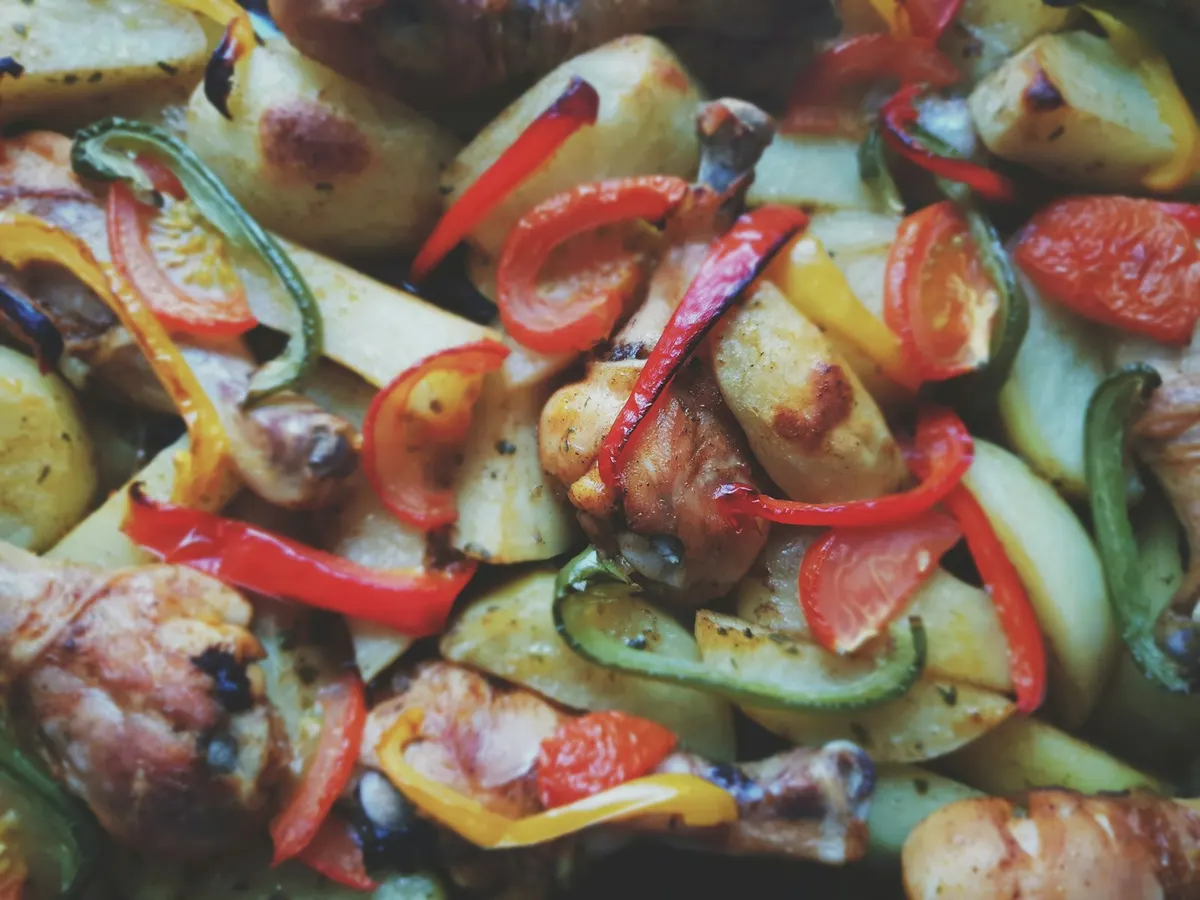
Chicken thighs, potatoes and peppers on one tray at 33 g protein a serving. The potatoes get a head start, which is the step most traybakes skip.
Adjust this recipe
Ingredients
- 600 g boneless chicken thighs, skinless, 2 to 3 per person
- 600 g new potatoes, halved, or quartered if large
- 240 g red pepper, cut into wide strips
- 160 g red onion, cut into thick wedges
- 4 tsp olive oil
- 4 tsp smoked paprika
- 2 tsp dried oregano
Method
- Heat the oven to 220C fan. A traybake needs a hotter oven than most people give it, because the tray has to recover its temperature every time you open the door.
- Toss the potatoes with half the oil and a good pinch of salt and spread them on the tray. Roast them alone for 15 minutes. This is the step that makes the difference: potatoes need roughly twice as long as chicken thighs, and putting everything in together is why traybakes come out with either dry chicken or hard potatoes.
- Meanwhile toss the chicken with the rest of the oil, the paprika and the oregano. Rub the spices in properly rather than scattering them, since dry spice sitting on a wet surface tastes raw.
- Take the tray out, push the potatoes to one side, and lay the chicken and onion in a single layer with space around each piece. Anything touching will steam instead of browning.
- Roast for 20 minutes.
- Add the peppers, tossing them into the fat already on the tray, and roast for a final 10 minutes. Peppers added at the start collapse into something sweet and wet, which is nice in a stew and wrong here.
- Check the chicken is cooked through at the thickest point, then let the tray sit for 5 minutes before serving. The juices redistribute and the potato skins crisp slightly as the steam escapes.
Every traybake recipe promises one tray and forty minutes. Most of them then list a potato and a chicken thigh and tell you to cook them together, which cannot work, because those two things do not take the same time.
You get one of two results. Either the potatoes are done and the chicken has been dry for ten minutes, or the chicken is right and the potatoes are still hard in the middle. Staggering the tray fixes it and costs nothing.
The potatoes get a fifteen minute head start
New potatoes at 220C take about 45 minutes. Boneless chicken thighs take about 25. That gap is the whole problem.
Start the potatoes alone, add the chicken and onion at the 15 minute mark, and add the peppers for the last 10. Everything finishes together and nothing has been sitting in a hot oven longer than it wanted to.
If you only remember one thing from this page, that is it.
Thighs rather than breast, and why
Chicken breast has slightly more protein per gram and slightly less fat, and it is the wrong cut here.
A traybake is an uncontrolled environment. The oven door opens, the tray comes out, things get pushed around, and the cooking time drifts by five minutes in either direction. Breast goes from cooked to dry across about a two minute window. Thighs have enough intramuscular fat and connective tissue to be forgiving across ten.
The difference at the plate is about 3 g of fat and 15 calories, which is worth paying for something that survives a real kitchen. The swap toggle applies breast if you want it, and it will still be a good dinner. It will just be less tolerant of you being distracted.
Space is not optional
The most common failure after the timings is a crowded tray.
Roasting needs the moisture leaving the food to escape. Pieces packed edge to edge trap that moisture between them and the whole tray steams: pale chicken, soft potatoes, no browned edges. Use two trays rather than one crowded one. It is genuinely better and it costs one extra tray to wash.
What the swaps do
At the base recipe this is 370 calories and 33 g of protein a serving, which is a real dinner rather than a token one.
Butternut squash in place of the new potatoes takes about 8 g of carbohydrate and 50 calories off, and it roasts in roughly the same time as the chicken, so it also removes the need for the head start. If you want the simpler version of this recipe, that swap is how you get it.
Both figures are estimates worked out from typical ingredient values rather than measured, and they move with the size of your potatoes.
As meal prep
This is one of the few traybakes that reheats properly, because thighs do not dry out on a second heating the way breast does.
Cook the potatoes slightly under if you know you are reheating. They finish in the microwave and go floury if they were already perfect the day before.