Chicken broth substitutes, from water to bone broth
Water works in most soups and stews if you salt it well. For a quick broth, dissolve bouillon in water as the label says, or use vegetable broth 1:1.
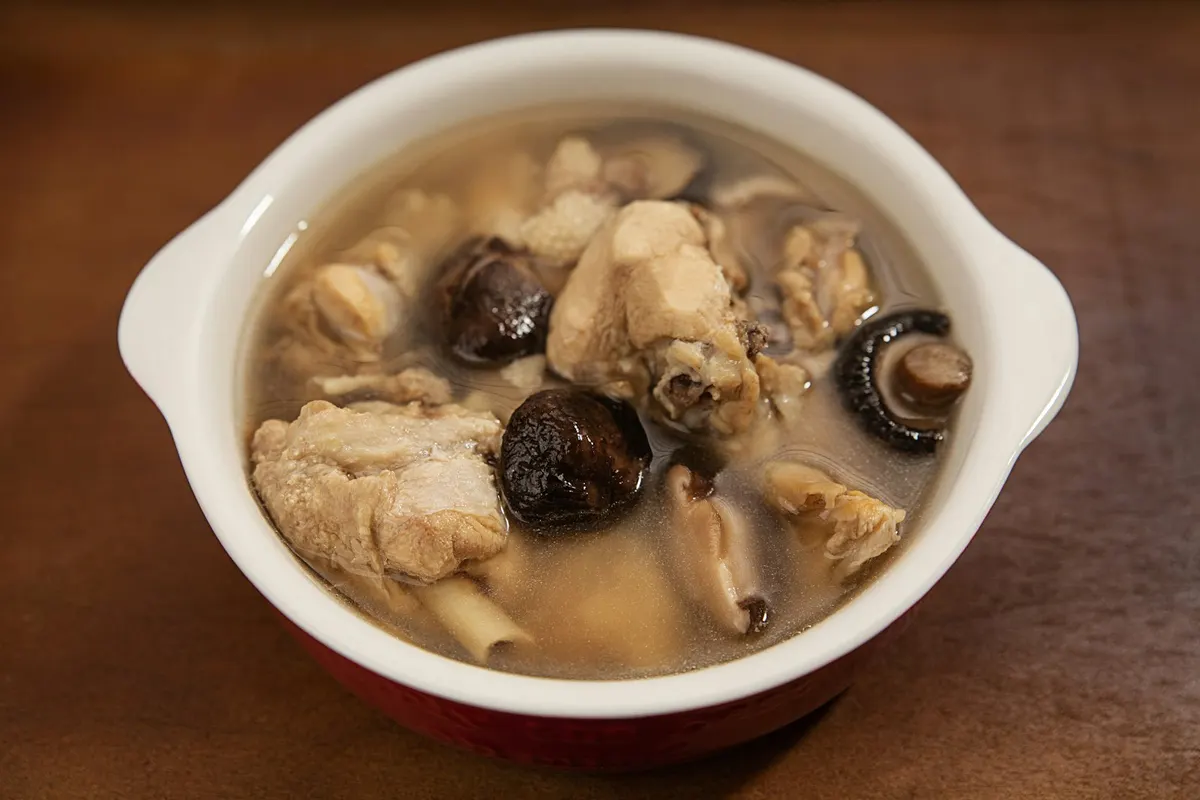
How they compare, per cup
Most substitute guides tell you what works and stop there. If you are choosing partly on macros, here are the numbers side by side.
Protein per cup. Bone broth carries about six times the protein of carton broth, and homemade stock nearly four times. Water, bouillon and vegetable broth carry almost none.
| Per cup | kcal | Protein | Carbs | Fat |
|---|---|---|---|---|
| Chicken broth, carton | 15 | 1.6 g | 1.1 g | 0.5 g |
| Reduced-sodium chicken broth | 17 | 3.3 g | 0.9 g | 0 g |
| Homemade chicken stock | 86 | 6 g | 8.5 g | 2.9 g |
| Chicken bone broth | 50 | 10 g | 0 g | 1 g |
| Bouillon cube in water | 12 | 0.9 g | 1.5 g | 0.3 g |
| Vegetable broth | 11 | 0.5 g | 2.1 g | 0.2 g |
| Beef broth | 17 | 2.7 g | 0.1 g | 0.5 g |
| Water with 1 tbsp butter | 102 | 0.1 g | 0 g | 11.5 g |
| Water | 0 | 0 g | 0 g | 0 g |
Typical values, rounded. Brands vary, so treat these as estimates for comparing options rather than exact figures.
Every option, and when to use it
Which one works depends on what the ingredient is doing in the recipe, so here is the full list, with where each one fails.
| Use | How much | Best for |
|---|---|---|
| Water, well seasoned | 1:1, with more salt and more aromatics | soups, stews, braises and beans that cook for a while Watch out: not for chicken soup, risotto or French onion soup, where the broth is the flavour |
| Bouillon cube, powder or stock pot | as the label says, since sizes differ | anything broth goes in Watch out: about as salty as carton broth, and some cubes contain wheat |
| Bouillon paste | 1 tsp per cup of water, for Better Than Bouillon | soups, gravy, rice and sauces Watch out: 680 mg of sodium a teaspoon |
| Vegetable broth | 1:1 | vegetarian cooking and pale soups Watch out: a little sweeter, and nearly as salty |
| Bone broth | 1:1 | soups and stews, when you want more protein Watch out: costs more, and sets to a jelly in the fridge |
| Beef broth | 1:1 | gravy, stews and dark sauces Watch out: darker and beefier, which shows in a pale soup |
| Mushroom broth | water simmered with a handful of dried shiitake for 20 to 30 minutes | vegetarian gravy, stuffing and pot pie Watch out: earthy, and dark in colour |
| Water and white wine | 1/4 to 1/2 cup of wine, the rest water | risotto, pan sauces and seafood Watch out: let it bubble for a few minutes so the wine cooks down |
| Water with butter or oil | 1 tbsp per cup of water | rice, grains and vegetables Watch out: adds about 100 calories a cup and no flavour of chicken |
| Pan drippings and water | the roast's skimmed juices, topped up with water | gravy Watch out: taste before salting, since drippings vary |
In most recipes, chicken broth is seasoned water that the dish will flavour further on its own, so water is a better substitute than it sounds. Where the broth is the main flavour, bouillon, vegetable broth or bone broth do the job, and the real differences between them are salt and protein, not calories.
When plain water is enough
Claire Saffitz at Bon Appétit makes the case that water is a more than acceptable replacement in most soups, stews, sauces and braises, and sometimes a better one, because a long-cooked dish full of onions, garlic and other aromatics builds its own broth as it simmers (Bon Appétit). Two things make it work. Salt more than you think, since carton broth is salty and you are taking that away. And add a flavour booster: a splash of white wine, a Parmesan rind, a little soy sauce or miso, or simply more of the recipe’s onions, garlic and herbs.
Keep real broth for the dishes where it is the flavour: chicken soup, risotto and French onion soup, by the same article’s account.
Bouillon cubes, powders and pastes: how much to use
Bouillon swaps 1:1 once it is made up, but brands make it up very differently, so read the label rather than assuming a cube makes a cup:
| Product | Directions |
|---|---|
| Better Than Bouillon Roasted Chicken Base | 1 tsp in 8 fl oz of boiling water, which the label equates to one cube or one can of broth (label) |
| OXO chicken stock cube (UK) | 1 cube in 190 ml of boiling water (OXO) |
| OXO chicken stock pot (UK) | 1 pot in 500 ml, or 750 ml for a lighter stock (OXO) |
| Knorr chicken bouillon cube, catering | 1 cube in 450 ml (Knorr specification) |
Made up as directed, bouillon is about as salty as regular carton broth, so it is no help if you are cutting sodium; see the table further down. And if gluten matters, check the cube: some contain wheat flour, as OXO’s chicken cube does, while Knorr’s catering cubes and OXO’s reduced-salt stock pots are sold as gluten free.
Chicken broth or chicken stock?
Classically, stock is simmered from bones and is rich in gelatin, so it sets when chilled and gives sauces body, while broth is simmered from meat and stays lighter (America’s Test Kitchen). On the shelf the distinction has gone: the USDA’s labelling policy says no distinction is made between broth and stock, and most cartons sit at the broth end whatever they are called (Serious Eats). So swap one for the other 1:1. The one place the difference shows is a sauce or gravy you reduce hard, where real stock’s gelatin gives body that carton broth cannot.
In Britain, chicken stock is the usual word, and a stock cube or stock pot the usual form. Everything on this page applies to it.
Bone broth: the protein swap
Bone broth is a stock by the classic definition, made from bones and gelatin rich, and it swaps 1:1 for chicken broth (Bon Appétit). The difference worth knowing is protein. Kettle & Fire’s chicken bone broth lists 10 g a cup against 1.6 g for carton broth by USDA’s figure, so a soup made with 4 cups of it carries about 34 g more protein across the pot. It also lists less sodium than a regular carton, 240 mg a cup against 924 mg.
The honest limits: it costs more, it sets to a jelly in the fridge, and the health claims made for bone broth go well beyond its protein.
Vegetarian and vegan substitutes
Vegetable broth is the straight swap, 1:1. It is a little sweeter and nearly as salty as chicken broth, so taste before salting. For more savoury depth, Food52’s Sodium Girl simmers a handful of dried or fresh shiitake in water for 20 to 30 minutes, and uses the liquid in gravy, stuffing and pot pie (Food52). Seasoned water with a spoonful of miso works in soups.
Beef broth instead of chicken broth
It works 1:1 in gravy, stews, pan sauces and anything already dark, where its deeper flavour fits. In a pale soup or a cream sauce it shows, both in colour and in a beefier taste, so vegetable broth or seasoned water is the better swap there. By USDA figures it is as salty as chicken broth.
For gravy
Turkey or chicken drippings, skimmed of most of their fat and topped up with water, are better than carton broth, since they taste of the bird you roasted. Taste before salting, because drippings vary. If there is not enough, top up with bouillon made to the label. For thickening it, how to thicken gravy has the amounts of flour and cornstarch by the cup.
How much sodium each option carries
| Per cup | Sodium |
|---|---|
| Chicken broth, carton | 924 mg |
| Beef broth, carton | 893 mg |
| Bouillon cube, made up as directed | 792 mg |
| OXO chicken stock cube, made up as directed | 730 mg |
| Better Than Bouillon, 1 tsp in a cup of water | 680 mg |
| Vegetable broth, carton | 654 mg |
| Reduced-sodium chicken broth | 554 mg |
| Homemade chicken stock, lightly salted | 343 mg |
| Chicken bone broth, Kettle & Fire | 240 mg |
| Low-sodium chicken broth | 72 mg |
| Water | 0, plus what you add |
USDA figures (USDA), with the branded rows from their labels, including Better Than Bouillon’s 680 mg a teaspoon. A cup of regular broth is 40% of the 2,300 mg Daily Value on its own, so for anyone watching sodium this is the table that matters, more than any calorie figure above.
Read the label words carefully, because they mean different things. Under FDA rules, reduced sodium or less sodium means at least 25% less than the regular product, while low sodium means 140 mg or less a serving (21 CFR 101.61). The soups on this site use reduced-sodium stock for that reason, and low-sodium stock, or water, cuts it much further.
Dishes to make next
- Healthy broccoli cheddar soup, and what Panera's bowl really costsA broccoli cheddar soup on 600 ml of reduced-sodium stock; a regular carton would add about 230 mg of sodium a serving.
- Healthy lasagna soup, with the cheese on top where you can see itA lasagna soup on 960 ml of reduced-sodium stock; a regular carton would add about 250 mg of sodium a serving.
- Healthy potato soup, creamy without the creamA potato soup on 880 ml of reduced-sodium stock; a regular carton would add about 340 mg of sodium a serving.
Common questions
Water, salted well and with extra onion, garlic or herbs, works in most soups and stews. For something closer, dissolve a bouillon cube, powder or paste in water as the label directs. Vegetable broth swaps 1:1, and bone broth works too, with more protein.
In most soups, stews, sauces and braises, yes: Bon Appétit calls water a more than acceptable replacement, and sometimes a better one. Season it more than you think, since carton broth is salty. Keep real broth for dishes where it is the main flavour, such as chicken soup, risotto or French onion soup.
Yes. Dissolve it in water as the label says and use it 1:1. Strengths differ by brand: an OXO cube makes 190 ml, a Knorr catering cube 450 ml, and Better Than Bouillon asks for 1 teaspoon per cup of water. Bouillon is about as salty as regular carton broth.
In British English it is usually chicken stock, and the everyday form is a stock cube or stock pot dissolved in boiling water. The two words are used interchangeably on American shelves too: the USDA's labelling policy draws no distinction between broth and stock.
Yes, 1:1, in gravy, stews and dark sauces, where its deeper flavour and colour fit. In a pale chicken soup or a white sauce it shows, both in colour and in taste, so vegetable broth or seasoned water is the better swap there.
Yes, 1:1, and it is the usual vegetarian swap. It tastes a little sweeter and carries nearly as much sodium, so taste before you add salt. A spoonful of miso or a few dried mushrooms simmered in it add back some savoury depth.