Buttermilk substitutes, and why the milk-and-lemon trick works
Stir 1 tbsp lemon juice into 1 cup milk and wait 10 minutes. Why acid is the part that matters, which substitutes work in baking, and how they compare on macros.
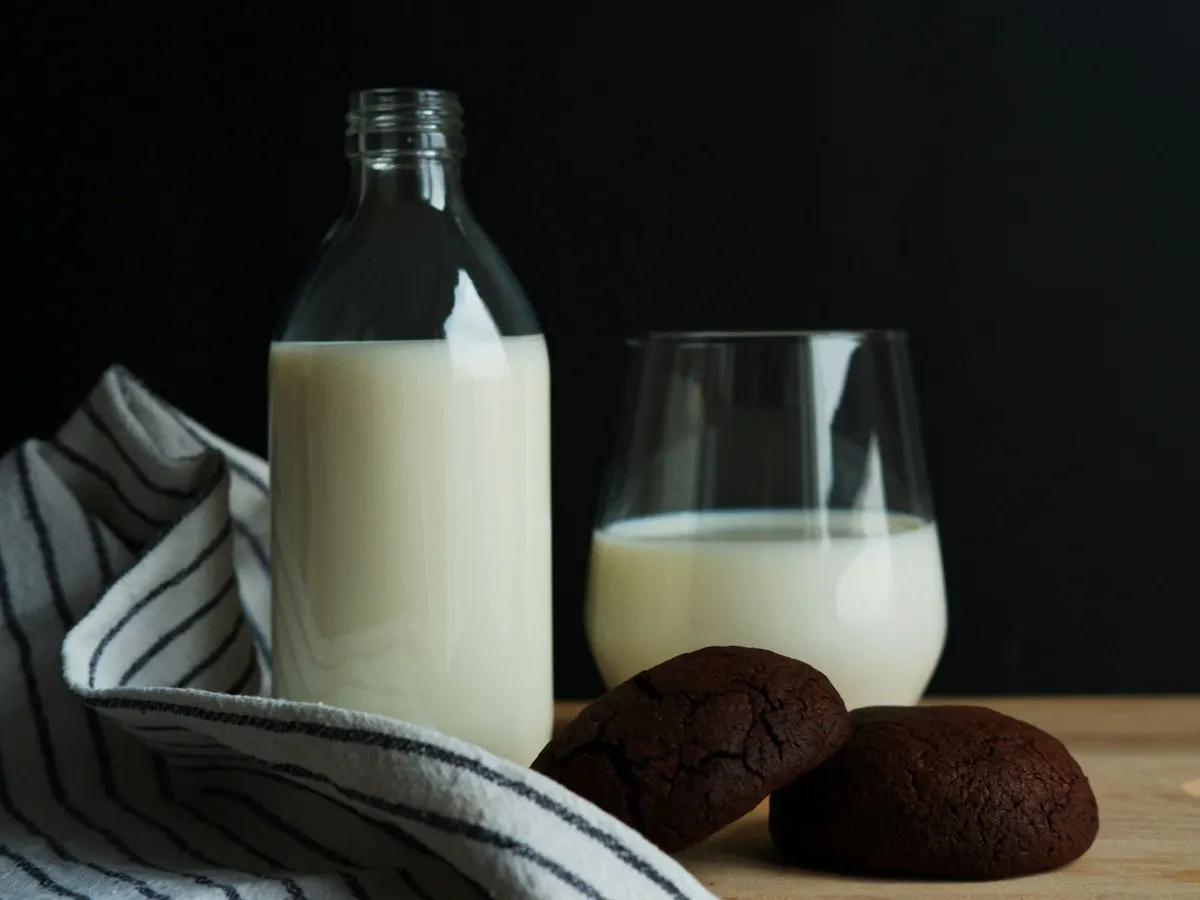
How they compare, per 100 g
Most substitute guides tell you what works and stop there. If you are choosing partly on macros, here are the numbers side by side.
Every option here does the same job in the batter, so fat is where the choice actually shows up. Sour cream thinned with milk carries around sixteen times the fat of the buttermilk it replaces; skimmed milk with lemon juice carries almost none.
| Per 100 g | kcal | Protein | Carbs | Fat |
|---|---|---|---|---|
| Buttermilk (cultured, low fat) | 40 | 3.3 g | 4.8 g | 0.9 g |
| Whole milk plus lemon juice | 61 | 3.2 g | 4.8 g | 3.3 g |
| Skimmed milk plus lemon juice | 34 | 3.4 g | 5 g | 0.2 g |
| Plain yogurt thinned with milk | 61 | 3.5 g | 4.7 g | 3.3 g |
| Greek yogurt thinned with milk | 73 | 6.5 g | 4 g | 3.6 g |
| Sour cream thinned with milk | 155 | 2.7 g | 3.8 g | 14.7 g |
| Soy milk plus lemon juice | 43 | 3.3 g | 2.5 g | 2.1 g |
Typical values, rounded. Brands vary, so treat these as estimates for comparing options rather than exact figures.
Every option, and when to use it
ReciPop picks one swap because it is optimising for your macro goal. Cooking is broader than that, so here is the full list including the ones the app does not reach for.
| Use | How much | Best for |
|---|---|---|
| Milk plus lemon juice | 1 tbsp lemon juice topped up to 1 cup with milk, rested 10 minutes | pancakes, soda bread, cakes, and almost all baking Watch out: it curdles slightly and is supposed to, so do not throw it away |
| Milk plus white vinegar | 1 tbsp vinegar topped up to 1 cup with milk, rested 10 minutes | the same jobs, and it is cheaper Watch out: use plain white or cider vinegar, not balsamic or malt |
| Plain yogurt thinned with milk | 3/4 cup yogurt plus 1/4 cup milk | richer bakes, marinades, and dressings |
| Greek yogurt thinned with milk | 1/2 cup yogurt plus 1/2 cup milk | the highest-protein version, and tenderising chicken |
| Sour cream thinned with milk | 3/4 cup sour cream plus 1/4 cup milk | cakes and scones where extra richness is welcome Watch out: noticeably higher in fat than real buttermilk |
| Cream of tartar plus milk | 1 3/4 tsp cream of tartar whisked into 1 cup milk | when there is no lemon or vinegar in the house Watch out: whisk it into a splash of milk first or it stays lumpy |
| Plant milk plus lemon juice | 1 tbsp lemon juice topped up to 1 cup with soy or oat milk | dairy-free baking Watch out: soy curdles most convincingly, oat barely thickens at all |
The part that actually matters
Buttermilk does two things in a recipe: it adds acid and it adds a little tang. The acid is the important one.
Most recipes calling for buttermilk also call for baking soda, which a British recipe will list as bicarbonate of soda. Same raising agent, same jar, and it needs an acid to react with. That reaction is what lifts the bake. Swap in plain milk and the soda has nothing to work against, so you get a flat result that can taste faintly soapy.
That is why the milk-and-lemon trick works. You are not imitating buttermilk’s flavour, you are restoring the acid the recipe was designed around.
The 10-minute fix
Put one tablespoon of lemon juice or plain white vinegar in a measuring jug. Top it up to one cup with milk. Stir once, then leave it alone for ten minutes.
It will look slightly curdled and separated. That is correct. The acid has denatured the milk proteins, which is exactly the reaction you wanted. Do not throw it out and start again.
Five minutes is enough if you are rushing. Longer does no harm.
What to use for what
Pancakes, soda bread, scones, biscuits, most cakes: milk plus lemon juice or vinegar. It is the closest match on consistency and behaves identically with raising agents.
Marinades: yogurt thinned with milk. Buttermilk is a classic chicken marinade because the acid and the calcium together tenderise without turning the meat to mush the way a lemon-heavy marinade does. Thinned Greek yogurt does the same job and clings better.
Dressings: plain yogurt thinned with milk, which gives you the tang and enough body to coat. Plain yoghurt on a British label is the same thing, and here it genuinely does not matter which tub you take: you are thinning it back down anyway, so strained or not makes no difference to the result.
Dairy-free baking: soy milk plus lemon juice. Soy has enough protein to curdle properly. Oat and almond barely thicken, but the acid still does its job on the raising agent, so the bake works even if the liquid looks thin.
Can you use plain milk instead of buttermilk?
For the liquid, yes. For the rise, no, and that is the part that catches people out.
Buttermilk is acidic. Recipes that call for it almost always pair it with baking soda, or bicarbonate of soda on a British recipe, and that raising agent does nothing at all without an acid to react with. Swap in plain milk and you have not made a slightly different pancake, you have removed the reaction that was supposed to lift it. Flat, dense, and nobody can work out why.
The ten-minute fix above solves exactly this by putting the acid back. It is not a compromise, it is the same chemistry.
Kefir is the closest thing on the shelf. Cultured, pourable and already acidic, so it goes in 1:1 with nothing added and no waiting. If your shop has it, it is a better answer than anything you can mix yourself.
Yogurt or sour cream, thinned with milk, both work, because both are cultured and acidic. Loosen them to the consistency of single cream first or the batter will be too stiff.
Half and half will not do it, for the same reason plain milk will not. It is richer, not sourer, and richness was never the point.
For fried chicken it is a different job
The buttermilk in a fried chicken brine is not there for lift, so the raising agent problem does not apply. It is there to tenderise, and to give the flour something to cling to.
That makes it the one case where almost anything acidic and pourable works. Milk with a tablespoon of lemon juice, thinned yogurt, or kefir will all brine and coat perfectly well. Plain milk on its own is the only weak choice, and even then the coating sticks; the meat is just less tender.
The one that quietly wrecks the macros
Sour cream thinned with milk is a common recommendation and it does work in a cake. But it lands around 155 kcal and 14.7 g fat per 100 g, against roughly 40 kcal and 0.9 g for real buttermilk. That is not a small difference, and no substitute list I checked mentions it.
If you are choosing on macros rather than convenience, skimmed milk with lemon juice is the lightest option and Greek yogurt thinned with milk is the highest-protein one at roughly double buttermilk’s protein.
Values are typical figures, rounded, and vary by brand. They are here for comparing options rather than for precision.
Common questions
One tablespoon of lemon juice or white vinegar topped up to one cup with milk, left to stand for 10 minutes. It will look slightly curdled, which is correct. This covers pancakes, soda bread, cakes and biscuits, and uses things most kitchens already have.
About 10 minutes at room temperature. That is long enough for the acid to denature the milk proteins, which is what thickens it and gives it the tang. Five minutes will do at a push. Waiting longer does no harm.
Not without changing the recipe. Buttermilk is acidic, and most recipes that call for it use baking soda, listed as bicarbonate of soda in Britain, which needs that acid to react and lift the bake. Plain milk leaves the soda with nothing to react with, so the result is flat and can taste soapy.
Greek yogurt thinned with milk, at roughly 6.5 g per 100 g, which is about double real buttermilk. Sour cream thinned with milk is the one to avoid on macros: it is around 155 kcal and 14.7 g fat per 100 g against buttermilk's 40 kcal and 0.9 g.
Yes. Use one tablespoon of lemon juice topped up to a cup with soy milk. Soy curdles most convincingly because it has enough protein to react with the acid. Oat and almond milk barely thicken, though the acid is still there to drive the raising agent, which is the part that matters most.