Lighter mashed potatoes that are still worth eating
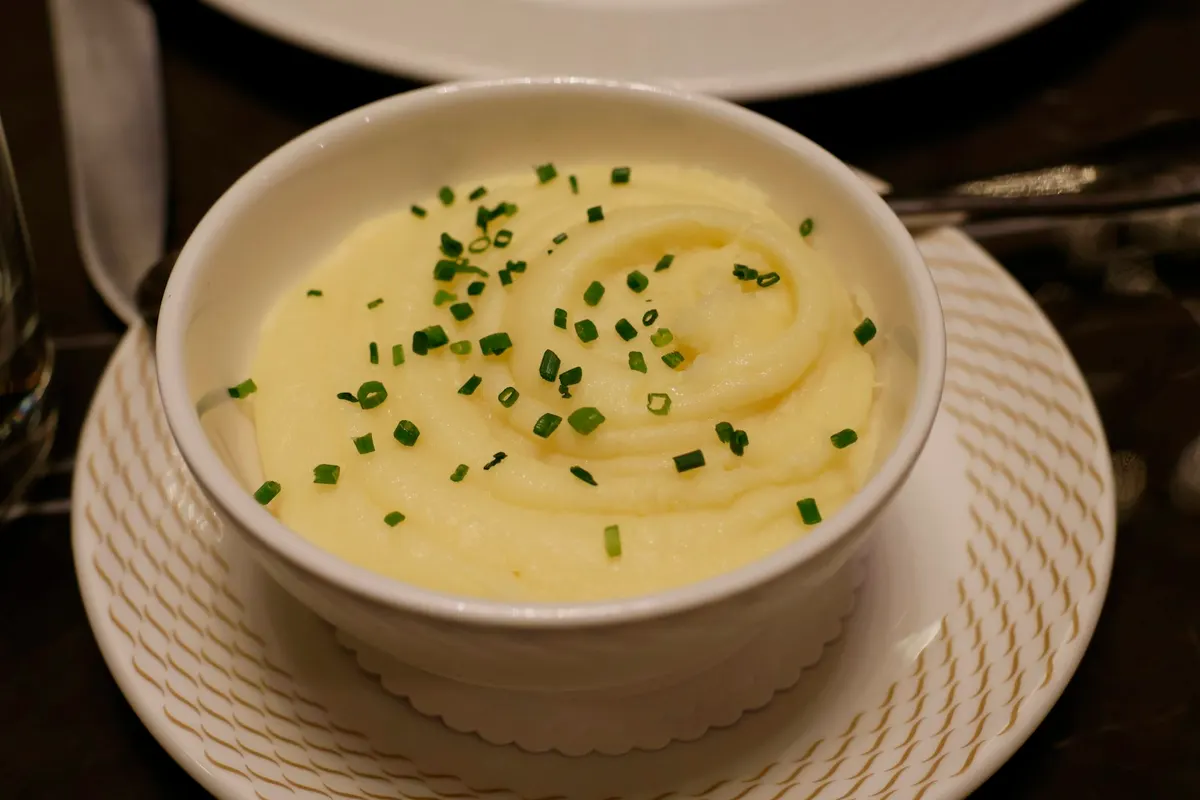
Greek yogurt for the sour cream keeps mash creamy and adds protein. Why floury potatoes and warm milk matter more to the texture than the fat does.
Adjust this recipe
Ingredients
- 800 g floury potatoes, Maris Piper or russet, peeled and quartered
- 180 ml semi-skimmed milk, warmed, not fridge-cold
- 48 g butter
- 100 g sour cream
Method
- Put the potatoes into cold salted water in large pieces rather than small ones, and bring them up to a simmer. Small cubes have more surface area, take on more water, and give you a looser mash before you have added anything to it.
- Simmer for about 20 minutes, until a knife slides in with no resistance at all. Underdone potato will not mash smooth however hard you work it, and working it harder is exactly what makes mash gluey.
- Drain well and return the potatoes to the empty hot pan for a minute off the heat. The residual heat drives off the surface water as steam, which is the difference between mash that holds a spoon and mash that slumps.
- Warm the milk while that happens. Cold milk into hot potato drops the temperature of the whole bowl and you spend the next ten minutes reheating something that should have gone to the table.
- Mash with a ricer or a hand masher. Not a food processor or a stick blender: the blades rupture the starch granules and you get wallpaper paste in under thirty seconds, which is not recoverable.
- Beat in the butter first, then the warm milk, then the sour cream last and off the heat. Fat before liquid coats the starch and keeps the texture short.
- Season now and taste. Potato takes far more salt than most people expect, and mash seasoned before the dairy goes in always tastes flat afterwards.
Most lighter mash recipes take the butter out and hope you do not notice. You notice.
The texture of mash is decided long before any dairy goes near it, by which potato you bought, how long you cooked it, and how hard you worked it. Get those three right and you can take real fat out without the result tasting like a compromise. Get them wrong and no amount of butter rescues it.
Floury, not waxy
This is the decision that matters most and the one nobody mentions.
Floury potatoes, Maris Piper or King Edward in the UK, russet or Idaho in the US, are low in moisture and high in starch. They break down into dry fluffy grains that absorb dairy. Waxy potatoes, Charlotte or new potatoes, hold together in slippery lumps and release starch as glue when you push them.
If you have only waxy potatoes, you cannot fix it with technique. Make something else with them.
Steam the water off before you mash
Drain the potatoes, put them back in the hot empty pan, and leave them off the heat for a minute.
You will see steam come off. That is water leaving, and every gram of it that leaves now is a gram you do not have to compensate for with fat later. It costs one minute and it is the single highest-return step here.
Never a food processor
Mash is one of the few things where a blade is actively destructive.
Potato starch sits in granules. A masher or a ricer separates them. A spinning blade ruptures them and releases free starch, which turns the whole bowl elastic and glue-like in seconds. There is no way back from it.
A ricer gives the smoothest result. A hand masher is fine. A fork works. A food processor does not.
Where the fat actually goes
At the base recipe this is 315 calories and 16 g of fat a serving, mostly from the butter and the sour cream.
Greek yogurt in place of the sour cream is the swap worth making: about 2 g more protein and 5 g less fat, and in mash it is genuinely undetectable, because the tang it brings is the same tang the sour cream was there for.
The butter swap is the one you will notice. Light crème fraîche takes about 8 g of fat and 74 calories out per serving, which is the largest single change available here, and it does make the mash taste less rich. That is a real trade rather than a free win. If this is the Thanksgiving table, keep the butter and take the yogurt swap instead.
Both figures are estimates from typical ingredient values rather than measurements.
Add the dairy off the heat
Sour cream and yogurt both split if you stir them into something bubbling. Take the pan off the heat, let it stop steaming furiously, then fold them in.
Once dairy has split in mash you cannot bring it back, and it goes from creamy to grainy in about ten seconds.
Making it ahead
Mash holds well in a covered dish in a low oven for up to an hour, which is usually the real constraint on a big meal. It does not freeze well: the starch network breaks on thawing and the texture goes watery.
If you are building a whole roast around this, the heavy cream substitutes page covers the other four jobs cream does on that table, including the one where no substitute works.