Baking soda substitutes, and what each one changes
Use 1 tablespoon of baking powder for every teaspoon of baking soda. The bake comes out a little puffier, paler and tangier, and cookies spread less.
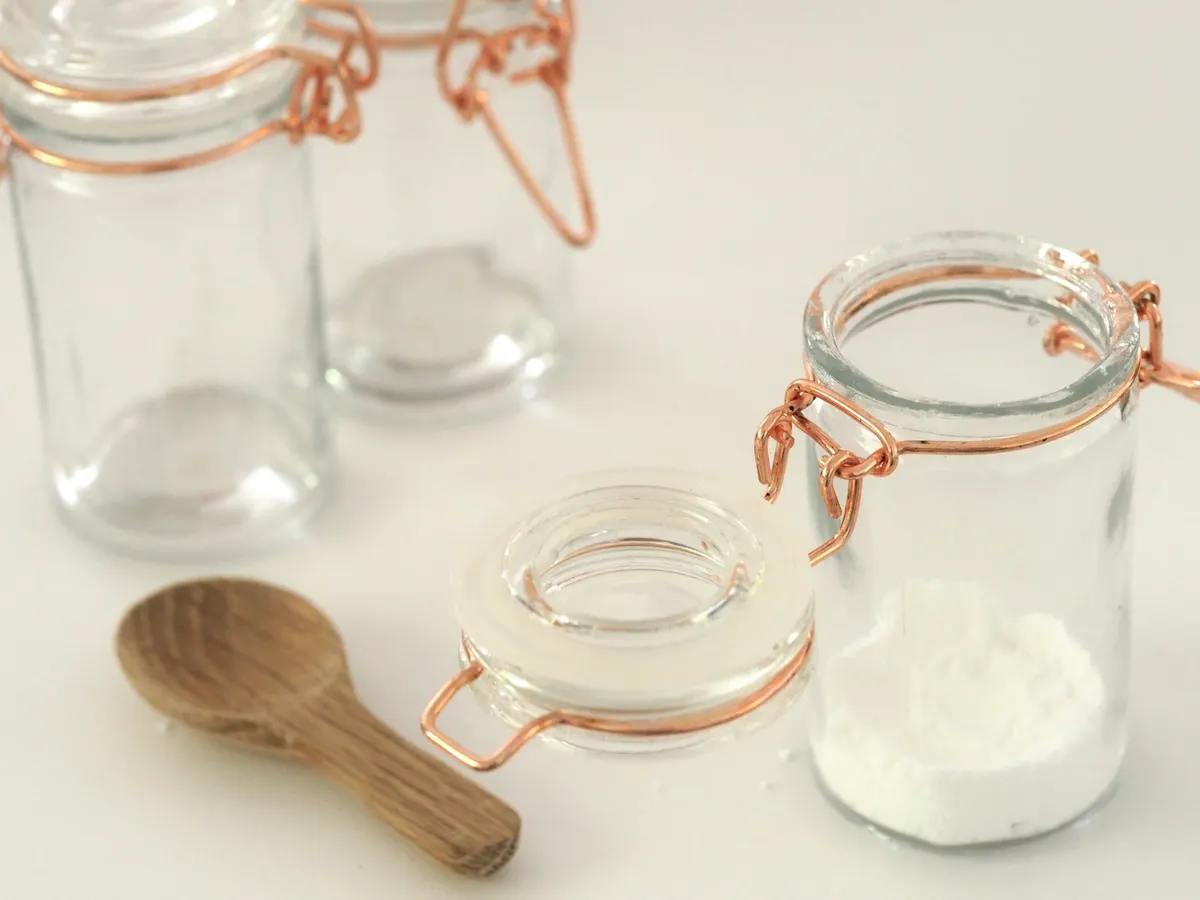
Every option, and when to use it
Which one works depends on what the ingredient is doing in the recipe, so here is the full list, with where each one fails.
| Use | How much | Best for |
|---|---|---|
| Baking powder | 3 tsp, which is 1 tbsp, per 1 tsp of soda | cookies, cakes, muffins, quick breads and pancakes Watch out: a little puffier, paler and tangier, and cookies spread less |
| Potassium bicarbonate | 1:1, plus 1 tsp salt for every 3 tsp | low-sodium baking Watch out: rarely on supermarket shelves, and it carries a lot of potassium |
| Self-rising flour (self-raising in the UK) | cup for cup in place of the all-purpose flour | muffins, quick breads and pancakes Watch out: each cup carries about the lift of 1/2 tsp of soda; American self-rising has salt in it |
| Whipped egg whites | beat stiff, fold in, and take the same volume of liquid out | pancakes, waffles and light cakes Watch out: only where the recipe has eggs to separate |
| Baker's ammonia | about the same weight as the soda | crackers and thin, crisp cookies Watch out: it smells of ammonia as it bakes, and only bakes off fully from thin, dry bakes |
| Club soda | in place of the recipe's liquid | pancakes and waffles, mixed and cooked at once Watch out: a whole can holds at most a sixteenth of a teaspoon of soda, so the bubbles do all the work |
| Leave it out | nothing | pancakes and some drop cookies, in a pinch Watch out: flatter and paler; cakes, muffins and quick breads come out dense |
Baking powder is the swap nearly every kitchen has: 3 teaspoons, which is 1 tablespoon, for each teaspoon of baking soda. It works, but it is not quite the same bake. Baking soda does three other jobs as well as lifting, and baking powder does them much less.
How much baking powder replaces baking soda
| Baking soda in the recipe | Baking powder instead |
|---|---|
| 1/4 tsp | 3/4 tsp |
| 1/2 tsp | 1 1/2 tsp |
| 3/4 tsp | 2 1/4 tsp |
| 1 tsp | 1 tbsp |
| 1 1/2 tsp | 1 tbsp + 1 1/2 tsp |
| 2 tsp | 2 tbsp |
The three times rule is the one King Arthur Baking, Arm & Hammer and Clabber Girl all give. If the recipe already has baking powder in it, add this on top of what it asks for (Food Network).
What changes when baking powder replaces soda
Baking soda raises a dough’s pH, and that does more than make gas (Serious Eats). Baking powder carries its own acid to use up its soda, so it does not push the dough alkaline. Three things follow.
- Spread. An alkaline dough sets more slowly, so cookies spread further before they firm up. In Serious Eats’ cookie tests, baking powder made cakier cookies that rose higher, with smoother tops, where soda made them craggier. Press the dough balls a little flatter to make up some of the difference.
- Colour and flavour. Browning runs faster in alkaline conditions (American Society of Baking), so soda deepens both the colour and the toasty flavour. Expect a paler bake. In devil’s food cake, soda is also what gives the dark, reddish crumb (Chemistry of Cooking).
- Tang. Soda neutralises the recipe’s own acid: buttermilk, yogurt, brown sugar, natural cocoa. Baking powder brings its own acid instead, so the recipe’s acid stays and the bake tastes sharper (King Arthur Baking). Cornell’s extension service suggests swapping acidic liquids for plain ones where the recipe allows.
A tablespoon of powder can also leave a slightly bitter or metallic note, which King Arthur Baking and Arm & Hammer both mention.
Which swap for which bake
| You are making | Best swap | What to expect |
|---|---|---|
| Chocolate chip and other chewy cookies | Baking powder, 3 times the soda | Puffier, paler, less spread |
| Gingersnaps and crisp cookies | Buy soda if you can | The crunch comes from soda; without it, Serious Eats’ gingersnaps came out cakey and bland |
| Banana bread, muffins, quick breads | Baking powder, 3 times the soda, or self-rising flour | Close to the original, a little paler |
| Chocolate and buttermilk cakes | Baking powder, 3 times the soda | Tangier, and lighter in colour |
| Pancakes and waffles | Baking powder, 3 times the soda, or whipped egg whites | Fluffy either way; a buttermilk batter tastes a little sharper |
Potassium bicarbonate, the low-sodium swap
It is baking soda’s closest relative: the same bicarbonate, with potassium where soda has sodium, and it raises a bake the same way (Bob’s Red Mill). Use it in the same amount. If you weigh, it takes about a fifth more by weight to give off the same gas (American Society of Baking). Without sodium a bake can taste flat, so Bob’s Red Mill adds 1 teaspoon of salt for every 3 teaspoons of potassium bicarbonate.
Two catches. It is rarely on supermarket shelves: Bob’s Red Mill points to the supplement aisle or online. And it carries a lot of potassium, about 2 g for each teaspoon of soda it replaces when weighed for the same lift, which matters if you have been told to limit potassium.
Self-rising flour, egg whites and club soda
- Self-rising flour carries about 1 1/2 teaspoons of baking powder and 1/4 teaspoon of salt in every cup (Allrecipes), so by the three times rule each cup has the lift of about 1/2 teaspoon of soda. Use it cup for cup in place of the flour and leave out the recipe’s salt. British self-raising flour usually has no salt in it, as the baking powder page explains, so keep the salt with a British bag.
- Whipped egg whites add air rather than gas. Beat them stiff, fold them in last, and take the same volume of liquid out of the recipe (Allrecipes).
- Club soda gets suggested in place of the recipe’s liquid, but its bicarbonate is tiny. USDA puts a 12-ounce can at about 75 mg of sodium (USDA), so even if all of it came from baking soda, the whole can would hold about a sixteenth of a teaspoon. Whatever lift it gives comes from the bubbles, which escape as you stir, so keep it for a batter you mix briefly and cook at once.
Can you bake without baking soda?
Some things, yes. Allrecipes names chocolate chip cookies and pancakes as the recipes you can get away with, and Food Network warns that the pancakes come out closer to crêpes and the cookies need flattening before they bake. Cakes, muffins and quick breads need a raising agent to rise at all (Allrecipes). A bake that relies on soda for crunch suffers most: without any, the Serious Eats gingersnaps came out cakey and bland.
Used baking powder instead of baking soda by mistake?
If it went in at the same amount, the bake has about a third of the lift the recipe planned, since baking soda is three to four times as strong (Arm & Hammer). It will still rise, but less, and come out denser and paler, possibly with a slightly metallic taste. It is perfectly safe to eat.
The opposite mistake, soda where the recipe wanted powder, is the one that tastes soapy. The baking powder page explains why, and how to swap in that direction.
Bicarbonate of soda in a British recipe
Bicarbonate of soda, often shortened to bicarb, is baking soda: the same sodium bicarbonate under its British name. Everything on this page applies, so use 3 teaspoons of baking powder for each teaspoon of bicarb. A British recipe says plain flour where an American one says all-purpose, and a teaspoon is 5 ml.
Can you use cornstarch instead of baking soda?
No. Cornstarch, cornflour in the UK, thickens liquids and does nothing for lift; baking soda is a raising agent. They only look alike in the cupboard. The cornstarch page answers the same mix-up from the other side.
How much sodium the swap changes
A teaspoon of baking soda carries 1,260 mg of sodium by USDA’s figure (USDA), more than half the 2,300 mg Daily Value. Spread across a batch of cookies that is modest per cookie, but the swaps are not equal:
| In place of 1 tsp baking soda | Sodium |
|---|---|
| 1 tsp baking soda, for comparison | 1,260 mg |
| 1 tbsp baking powder, with sodium aluminium sulphate | 1,463 mg |
| 1 tbsp aluminium-free baking powder, phosphate only | 1,089 mg |
| 1 tsp potassium bicarbonate, with Bob’s Red Mill’s salt | 776 mg |
| 1 tsp potassium bicarbonate, no salt | 0 |
So a sodium aluminium sulphate powder adds about 200 mg, which trimming the recipe’s salt a little takes back. Aluminium-free powder saves about 170 mg, and potassium bicarbonate, even with the salt added back, cuts the sodium by about 40%. These are estimates from USDA’s figures for American products; a British tub will differ, so the label is the better guide.
Dishes to make next
- High protein pancakes that still taste like pancakesPancakes with 1/2 teaspoon of baking soda, which 1 1/2 teaspoons of baking powder replaces, on top of the 2 already in.
Common questions
Baking powder: 3 teaspoons, or 1 tablespoon, for each teaspoon of baking soda. Potassium bicarbonate swaps in the same amount if you have it, with a little salt added. Self-rising flour in place of the flour, or stiffly whipped egg whites, give some lift too.
1 tablespoon of baking powder. Or 1 teaspoon of potassium bicarbonate with about 1/3 teaspoon of salt, the ratio Bob's Red Mill uses, if you want to cut the sodium.
Yes, at three times the amount. The bake comes out a little puffier and paler, and slightly tangier if the recipe has buttermilk or brown sugar, because baking soda neutralises that acid and baking powder does not. Cookies spread less.
Only some things. Pancakes and chocolate chip cookies still work, flatter and paler: Food Network warns the pancakes come out closer to crêpes. Cakes, muffins and quick breads need a raising agent, so use baking powder instead.
If it went in at the same amount, the bake has about a third of the lift the recipe planned. It still rises, but less, so expect a denser, paler result that may taste slightly metallic. It is perfectly safe to eat.
No. Cornstarch thickens and has no raising power, while baking soda is a raising agent. Use baking powder, at three times the amount, instead.