Vegetable oil substitutes, and the swaps that cut the fat
Canola, sunflower or light olive oil replace vegetable oil 1:1. In baking, melted butter works too, and applesauce or Greek yogurt can replace half and cut the fat.
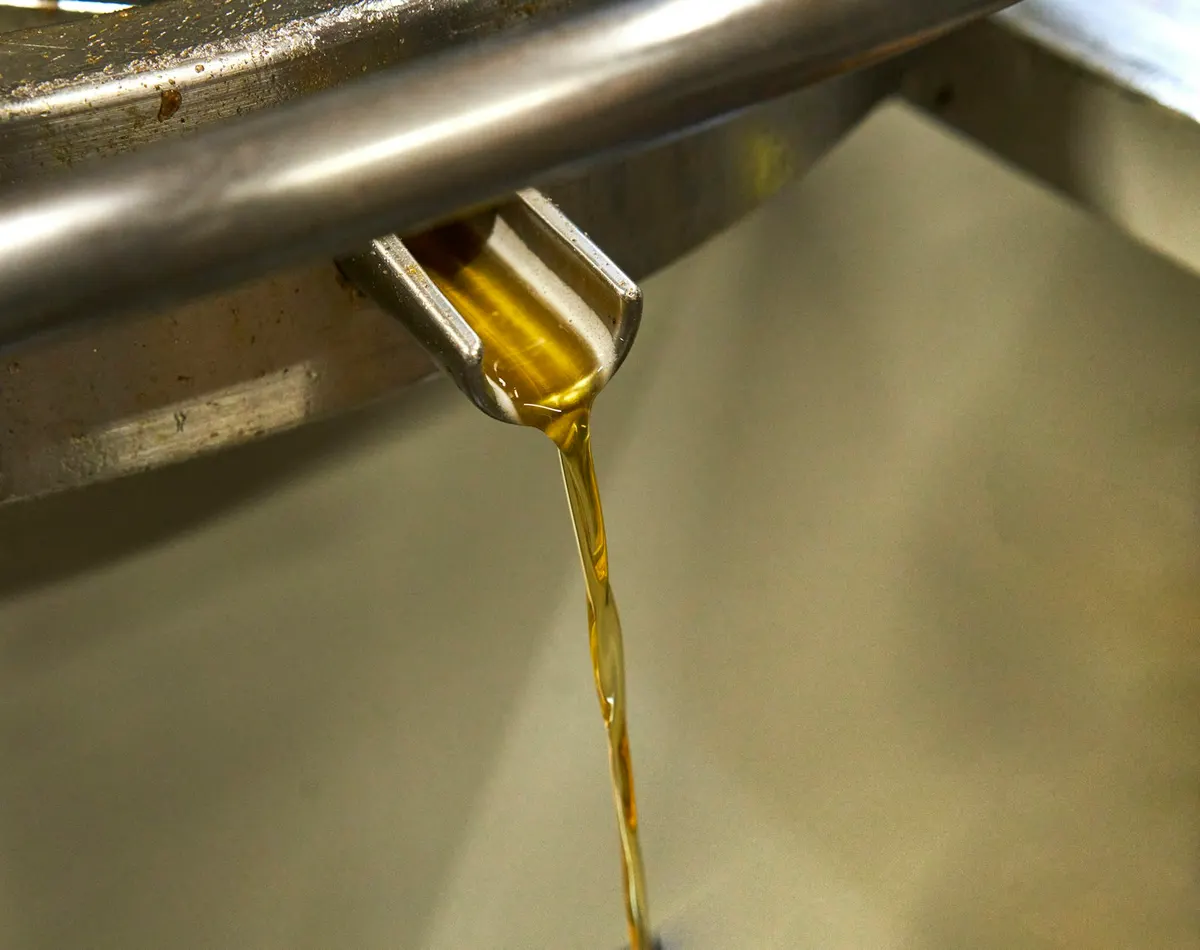
How they compare, per 1/2 cup
Most substitute guides tell you what works and stop there. If you are choosing partly on macros, here are the numbers side by side.
Every oil comes to about 960 calories in half a cup, and butter and mayonnaise are not far behind. Applesauce, yogurt, banana and pumpkin carry about 100 or fewer, which is the whole case for them, and they are mostly water rather than fat, which is why they change the texture.
| Per 1/2 cup | kcal | Protein | Carbs | Fat |
|---|---|---|---|---|
| Vegetable (soybean) oil | 964 | 0 g | 0 g | 109 g |
| Olive oil | 955 | 0 g | 0 g | 108 g |
| Coconut oil | 972 | 0 g | 0 g | 108 g |
| Melted butter | 814 | 1 g | 0.1 g | 92 g |
| Mayonnaise | 748 | 1.1 g | 0.6 g | 82.3 g |
| Mashed banana | 100 | 1.2 g | 25.7 g | 0.4 g |
| Plain Greek yogurt, fat-free | 67 | 11.6 g | 4.1 g | 0.4 g |
| Unsweetened applesauce | 51 | 0.2 g | 13.8 g | 0.1 g |
| Canned pumpkin | 42 | 1.3 g | 9.9 g | 0.3 g |
Typical values, rounded. Brands vary, so treat these as estimates for comparing options rather than exact figures.
Every option, and when to use it
Which one works depends on what the ingredient is doing in the recipe, so here is the full list, with where each one fails.
| Use | How much | Best for |
|---|---|---|
| Canola (rapeseed), corn, sunflower or peanut (groundnut) oil | 1:1 | everything vegetable oil does, from cake mix to deep frying Watch out: unrefined, cold-pressed bottles taste of the seed, so buy refined for frying and plain cakes |
| Light or refined olive oil | 1:1 | baking, roasting and frying, where you want no olive taste Watch out: light means light in flavour, not in calories |
| Extra virgin olive oil | 1:1 | savoury cooking, olive oil cake and chocolate bakes Watch out: its peppery, fruity taste shows in a plain vanilla cake, and it is an expensive way to fill a fryer |
| Avocado oil | 1:1 | searing and frying, or anything else if it is what you have Watch out: usually the most expensive bottle on this list |
| Melted butter | 1:1 by volume, or 1 cup plus 3 tbsp per cup of oil to match the fat | cake mix, muffins, pancakes and waffles, for flavour and browning Watch out: brownies lose chew and dry out sooner, and it burns in a hot pan |
| Melted coconut oil, refined | 1:1 | dairy-free baking Watch out: it sets again below about 78F (25C), so cold eggs or milk can seize it into lumps, and it has more saturated fat than butter |
| Unsweetened applesauce | half the oil to start; all of it in muffins, quick breads, brownies and cake mix | muffins, quick breads, cake mix and brownies Watch out: a denser bake, and a cake mix needs a little less water |
| Plain Greek yogurt | 3/4 cup per cup of oil | muffins and quick breads, where a little tang suits Watch out: a tighter, denser crumb |
| Mashed banana or canned pumpkin | 1:1, half the oil to start | banana bread, spice cakes, muffins and brownies Watch out: both taste of themselves, and both darken a pale bake |
| Mayonnaise | about 1 cup per box of chocolate cake mix | chocolate cake, where its tang disappears Watch out: it is about three quarters fat, so it saves less than it looks like it should |
| Melted shortening or margarine | 1:1 | cake mix, if it is what you have Watch out: no advantage over any oil |
Any refined cooking oil replaces vegetable oil cup for cup, because that is all vegetable oil is. In baking, melted butter swaps 1:1 as well. Applesauce, Greek yogurt, mashed banana and canned pumpkin can take over part of the oil, and they are the only swaps here that cut the fat. They change the texture to do it.
What vegetable oil actually is
In the US, a bottle labelled vegetable oil is almost always soybean oil. Crisco’s has one ingredient, soybean oil. In Britain it is often rapeseed oil: Tesco’s own lists rapeseed oil and nothing else. Canola was bred from rapeseed, and the FDA lists canola oil as another name for low erucic acid rapeseed oil.
Either way, the job of vegetable oil is to taste of nothing and to take heat. So the useful question is what the oil is doing in your recipe.
| The recipe uses the oil to | Use | Avoid |
|---|---|---|
| Fry, sear or roast | Any refined oil | Butter, whose milk solids burn |
| Moisten a cake, muffin or brownie | Any oil, melted butter, or a purée for part of it | Solid fats straight from the fridge |
| Dress a salad or finish a dish | Any oil whose taste you want | Nothing: here flavour is the point |
Can I use olive oil instead of vegetable oil?
Yes, 1:1, in cooking and baking alike. It is the most searched version of this question, and Betty Crocker lists olive oil as a straight swap for vegetable oil, with one warning: some olive oil tastes peppery, and that can come through in a bake.
So the bottle decides. Light or refined olive oil has had most of its flavour taken out and behaves like vegetable oil anywhere. Light refers to the taste: the calories are the same as any other oil’s. Extra virgin keeps its fruity, peppery taste, which is welcome in savoury cooking, olive oil cake and chocolate bakes, and noticeable in a vanilla sponge.
For frying, USDA lists olive oil among the oils it recommends for deep frying. The reason to keep extra virgin for the pan rather than the fryer is the price, not safety.
The reverse question, vegetable oil in place of olive oil, has the same answer: cup for cup wherever the olive oil is a cooking fat, and a poor stand-in wherever it was there for its taste, as in a dressing or drizzled over a finished dish.
Can I use canola or avocado oil instead of vegetable oil?
Yes, both 1:1. Canola is the closest thing to vegetable oil there is, and in Britain the bottle of vegetable oil is often rapeseed oil, its close relative. Avocado oil tastes mild and, by Oklahoma State University’s figure, smokes above 482F, so it handles heat well. The only reason not to use it is the cost.
Sunflower, corn and peanut oil (groundnut oil in Britain) swap the same way. What matters is refined against unrefined: a cold-pressed bottle tastes of the seed, which is lovely on a salad and odd in a birthday cake.
Can I use butter instead of vegetable oil?
Yes. Melt it, let it cool a little, and use the same amount. Betty Crocker treats melted butter and oil as cup-for-cup swaps in muffins, quick breads and cakes, and Serious Eats made the same-amount swap in brownies when it tested the two.
Butter brings flavour and browning, and costs a little moisture. It is about 18 percent water, by King Arthur’s figure, so the same volume carries less fat than oil does. A cup of oil is about 218 g of fat by USDA values, and matching it takes about 1 cup plus 3 tablespoons of butter. In most bakes the plain volume swap is fine.
Where it shows is the day after. King Arthur has replaced a quarter to half of the butter in several of its own cakes with oil, to stop them drying out as fast. Serious Eats found the same in brownies: made with butter instead of oil, they lost chew and turned gritty by the next day, and a mix of butter and oil kept most of both.
Going the other way, oil in place of butter, is a different question: butter substitutes has the amounts.
Vegetable oil substitutes for baking
| Making | Best swap | How much | What changes |
|---|---|---|---|
| Cake mix | Melted butter or any oil | The same | Richer with butter |
| Lighter cake mix | Applesauce | Less water, see below | Slightly |
| Brownies | Butter, or butter and oil | The same | Less chew with all butter |
| Muffins and quick breads | Applesauce, yogurt, banana or pumpkin | Half the oil to start | Denser |
| Pancakes and waffles | Melted butter or any oil | The same | Very little |
| Chocolate cake mix | Mayonnaise | About 1 cup a box | Moist and rich |
What can I use instead of vegetable oil in cake mix?
Any other oil, or melted butter, in the same amount. For a lighter cake, Betty Crocker’s kitchens have tested applesauce in place of the oil in their mixes. The amounts differ by flavour, which is why there is no single rule. Their devil’s food takes 1 1/4 cups of water, 1/2 cup of applesauce and 3 eggs, and their yellow cake 1 cup of water, 1/2 cup of applesauce and 3 eggs. They say the texture and height of the cake change slightly, and that they did not recalculate the nutrition.
For a chocolate mix, mayonnaise works because it is made of oil and egg. Hellmann’s own recipe beats a box of chocolate cake mix with a cup of mayonnaise, a cup of water and 3 eggs, and no oil.
What can I use instead of vegetable oil in brownies?
Melted butter, for a richer brownie with a little less chew, or a mix of butter and oil, which Serious Eats found the best balance of chew, flavour and keeping.
Applesauce makes a much lower-fat brownie. King Arthur’s Better (for You) Brownies use a cup of applesauce and just 3 tablespoons of butter or oil, which its test kitchen puts at a third of the fat of a typical brownie. It drains the applesauce first, through a coffee filter, and says that is what makes them dense and moist.
Applesauce, yogurt, banana and pumpkin
Fat coats the flour in a batter and keeps it from turning tough. Mississippi State University Extension says purées such as applesauce and pumpkin do a similar job without adding fat, and advises replacing half the oil first and seeing how it turns out. Illinois Extension gives the same half-and-half starting point. Replacing all of it is a bigger change, and it suits some bakes better than others: the University of Florida’s extension says a full swap works well in quick breads, muffins and brownies, and Betty Crocker’s kitchens replaced all the oil in their cake mixes.
For Greek yogurt, Michigan State University Extension uses 3/4 cup of fat-free Greek yogurt for each cup of oil, which saves 1,829 calories and 224 g of fat by its arithmetic. That 3/4 cup also adds about 17 g of protein to the batch, by USDA values.
What that means per muffin: in a batch of 12 made with 1/2 cup of oil, the oil alone is about 80 calories and 9 g of fat in each muffin. Swapping half of it for applesauce takes about 38 calories and 4.5 g of fat off each one.
Is there a healthier substitute for vegetable oil?
It depends on which number you mean.
For calories and fat, the purées and yogurt, as the table at the top shows. Nothing else on the list cuts fat, because every other swap is a fat.
For saturated fat, the swap to make is towards canola, and away from coconut oil and butter.
| Per 1/2 cup | Saturated fat |
|---|---|
| Canola oil | 8.0 g |
| Olive oil | 14.9 g |
| Vegetable (soybean) oil | 17.0 g |
| Butter | 57.3 g |
| Coconut oil | 89.9 g |
Figures from USDA FoodData Central. The American Heart Association advises replacing saturated fats with unsaturated oils such as canola, soybean and olive oil, so the oils on this page are already the swap it recommends, and butter and coconut oil are the direction it advises against.
For frying, roasting and stir-frying
Use any refined oil. On USDA’s list of approximate smoke points, soybean and peanut oil are about 450F, canola about 435F, and corn, olive and sunflower about 410F. Its frying guide cooks chicken pieces at 375F and fish at 320F, below all of them.
Butter is the one to avoid for real heat, because its milk solids burn. Ghee, which is butter with the water and milk solids removed, fries without that problem.
Keep toasted sesame, walnut and flaxseed oil out of the pan as a straight swap. They are sold for their flavour, often unrefined, and a spoonful seasons a dish where a cupful would take it over.
Vegetable oil in Britain
The same bottle under the same name, but often rapeseed oil rather than soybean, as above. Peanut oil is sold as groundnut oil, applesauce as apple sauce or apple purée, and canned pumpkin as tinned pumpkin purée. Every amount on this page works the same.
Macro and saturated fat figures are per half cup from USDA FoodData Central, rounded, and brands vary. Treat them as estimates for comparing options rather than exact figures.
Dishes to make next
- High protein pancakes that still taste like pancakesPancakes with no oil in the batter at all, about 447 calories and 8 g of fat a plate with the toppings.
Common questions
Yes, cup for cup, in cooking and in baking. Light or refined olive oil tastes of very little, so it is the closest match. Extra virgin works too, but its peppery, fruity taste shows in a plain cake, and USDA lists olive oil among the oils it recommends for deep frying, so frying in it is safe, just expensive.
Yes, melted and cooled a little, in the same amount. The bake tastes richer and browns more. In brownies it costs some chew: Serious Eats swapped melted butter for the oil in an all-oil brownie and found them drier, and grittier by the next day. A mix of the two was its best compromise.
Any other oil or melted butter, in the same amount. For a lighter cake, Betty Crocker's kitchens tested unsweetened applesauce in place of the oil in its mixes, with less water: 1 1/4 cups of water, 1/2 cup of applesauce and 3 eggs for its devil's food. They say the texture and height change slightly.
Yes. Vegetable oil is not a special oil, just a label: in the US it is usually soybean oil, and in Britain often rapeseed oil. Any refined cooking oil, such as canola, corn, sunflower or light olive oil, does the same job cup for cup.